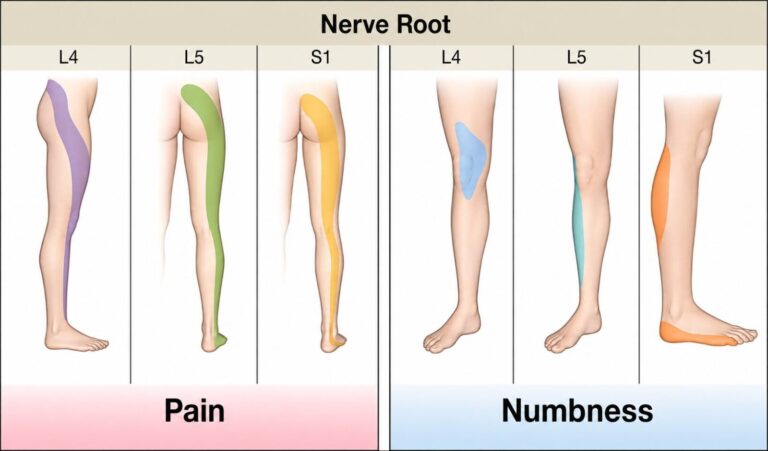
Lumbar Pain and Referral Patterns A Comprehensive Clinical Guide to Dermatomes, Radiculopathy, Referred Pain, MRI Limitations, and Diagnostic Precision
April 28th, 2026
shutterstock 1802868070

Pain Spa Clinical Education Series

Lumbar Pain and Referral Patterns

A Comprehensive Clinical Guide to Dermatomes, Radiculopathy, Referred Pain, MRI Limitations, and Diagnostic Precision

Pain arising from the lumbar spine is frequently mislocalised, with symptoms often felt in the buttock, groin, thigh, knee, calf, or foot rather than directly over the true pain generator. This clinician-focused review explores lumbar dermatomal, myotomal, sclerotomal, facet, sacroiliac, and peripheral nerve referral patterns, alongside practical examination findings, imaging limitations, and precision diagnostic strategies.

Pain Spa | Dr M. Krishna | Specialist Interventional Pain Management

Introduction: Why Lumbar Pain Is Often Misunderstood

Lumbar pain is one of the commonest reasons for medical consultation, imaging, and specialist referral, yet it is frequently misunderstood. A major clinical error is assuming that the site of pain reliably identifies the structure causing it. In practice, lumbar pain often behaves poorly as a localisation tool. Patients may report pain in the buttock, groin, thigh, knee, calf, shin, or foot even when the primary source lies elsewhere in the lumbar spine or pelvic girdle.

Pain Location Does Not Always Equal Pain Source

Pain from lumbar structures is commonly referred rather than truly local. Shared segmental innervation and convergence within the spinal cord mean that symptoms may be felt at a distance from the true pain generator.

  • L5 radiculopathy may present mainly as buttock or lateral hip pain
  • Facet joint pain may radiate into the thigh and be mistaken for sciatica
  • Sacroiliac joint pain may cause buttock, groin, or posterior thigh pain
  • L2–L3 radiculopathy may present as groin, anterior thigh, or medial knee pain
  • Superior cluneal nerve irritation may cause iliac crest or upper buttock pain

Why Different Structures Mimic Each Other

Structure Common Referral Pattern
Disc / nerve root Buttock, leg, calf, foot
Facet joints Low back, buttock, thigh
Sacroiliac joint PSIS, buttock, groin, thigh
Iliolumbar ligament Iliac crest, flank, PSIS
Muscles / myofascial pain Lumbar, gluteal, thigh
Cluneal nerves Iliac crest, upper buttock
Hip joint Groin, thigh, buttock

Why Precise Diagnosis Matters

Because symptoms overlap, treatment based on pain location alone often fails. A technically perfect injection into the wrong structure remains the wrong treatment.

  • History and pain behaviour
  • Neurological examination
  • Movement testing
  • Imaging correlation
  • Diagnostic injections where appropriate

Key Message

In lumbar medicine, where pain is felt does not always equal where pain starts. Effective management depends on identifying the true pain generator rather than treating symptoms based purely on location alone.

Understanding Dermatomes, Myotomes, and Sclerotomes

Accurate assessment of lumbar pain requires more than simply asking where symptoms are felt. Clinicians must understand how spinal nerve roots relate to sensory territories (dermatomes), motor function (myotomes), and deep somatic referral patterns (sclerotomes). These concepts remain highly useful in practice, but modern evidence shows they are more variable and less anatomically tidy than traditional textbook diagrams suggest.

What Is a Dermatome?

A dermatome is an area of skin predominantly supplied by sensory fibres from a single spinal nerve root. In lumbar medicine, dermatomes help interpret numbness, paraesthesia, burning pain, or altered sensation in the leg.

Root Level Typical Sensory Territory
L2 Anterior thigh
L3 Anterior thigh to medial knee
L4 Medial leg / medial malleolus
L5 Dorsum of foot / first web space
S1 Lateral foot / sole

Adjacent dermatomes overlap substantially, so true sensory deficits are often less sharply defined than classic maps imply.
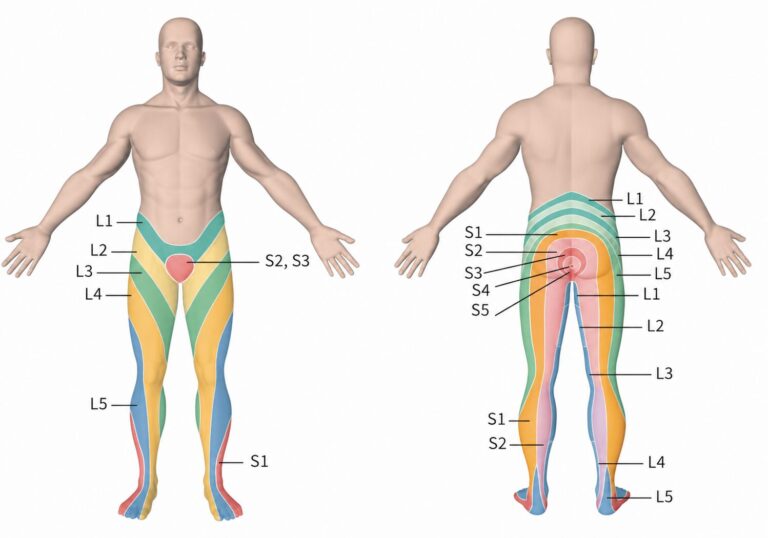
lumbar dermatomes

What Is a Myotome?

A myotome refers to the group of muscles predominantly supplied by motor fibres from a particular spinal nerve root. Myotomes are especially valuable when assessing weakness in radiculopathy.

Root Level Typical Movement Tested
L2 Hip flexion
L3 Knee extension
L4 Ankle dorsiflexion
L5 Great toe extension / hip abduction
S1 Plantarflexion

Most muscles receive input from more than one nerve root, so weakness patterns are rarely absolute.

What Is a Sclerotome?

A sclerotome describes deep somatic structures innervated segmentally, including bone, periosteum, ligaments, fascia, annulus fibrosus, and joint capsules. Clinically, the term is used to explain deep aching referral pain that does not follow a dermatomal pattern.

  • Lumbar facet joint pain referring into the buttock or thigh
  • Iliolumbar ligament pain referring to the PSIS or iliac crest
  • Discogenic pain referring to the buttock or groin
  • Vertebral endplate pain causing deep axial pain with diffuse spread

Sclerotomal pain is typically dull, aching, deep, poorly localised, and often difficult for patients to map clearly.

Why Traditional Maps Are Helpful but Imperfect

  • Significant overlap exists between adjacent dermatomes
  • Many muscles have dual or multi-root innervation
  • Individuals vary considerably from textbook norms
  • Provoked radicular pain often deviates from neat dermatomal lines
  • Pain may reflect irritation rather than fixed compression

Studies of transforaminal nerve root provocation found that L3–S1 irritation often produced buttock, posterior thigh, and calf pain regardless of exact level.
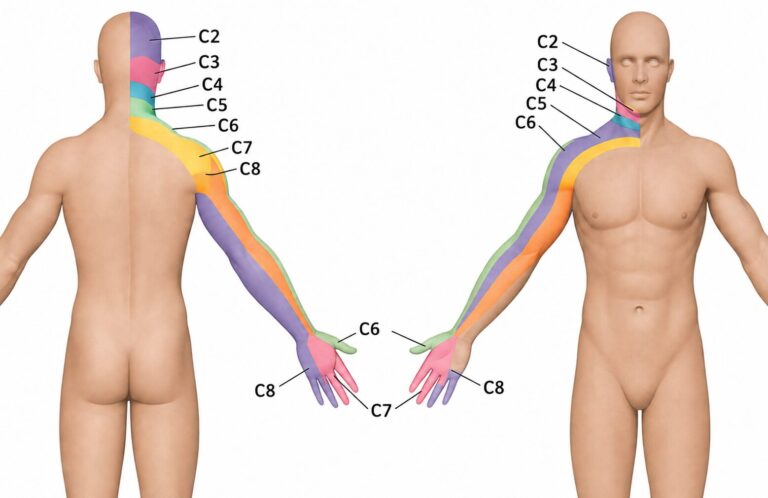
upper limb dermatomes

Why Modern Pain Patterns Are More Complex Than Textbook Diagrams

Real patients frequently present with mixed mechanisms rather than isolated lesions. A patient may simultaneously have mild radiculopathy, facet arthropathy, sacroiliac dysfunction, gluteal myofascial pain, and sensitisation from prolonged symptoms.

  • Chemical radiculitis without major compression
  • Dynamic positional stenosis
  • Convergent dorsal horn processing
  • Peripheral nerve sensitisation
  • Previous surgery or chronic pain neuroplasticity

Key Message

Dermatomes, myotomes, and sclerotomes should be viewed as clinical frameworks rather than rigid rules. They are most powerful when integrated with examination findings, imaging correlation, pain behaviour, and targeted diagnostic procedures.

Lumbar Radicular Pain: Dermatomal and Myotomal Referral Patterns (L1–L5)

Overview Table: Dermatomal Referral Patterns by Level

Lumbar radicular pain may follow recognisable sensory distributions, but real-world presentations often extend beyond neat textbook dermatome maps. Pain may be influenced by root irritation, inflammation, overlap between adjacent roots, and individual anatomical variability. The table below provides a clinically useful framework for common referral patterns.

Root Level Typical Dermatomal Distribution Key Sensory Area Typical Pain Quality
L1 Back, groin, inguinal canal, pelvis, upper inner thigh, scrotum / labia majora Groin crease / inguinal region Aching, burning, diffuse
L2 Back and front of thigh from below the inguinal canal to the knee; may include lateral hip Anterior mid-thigh Deep aching, dysaesthesia, anterior thigh pain
L3 Back, upper buttock, anterior thigh, knee, proximal medial lower leg Medial knee joint — highly specific Aching or burning around medial knee
L4 Medial buttock, lateral thigh, medial leg, dorsum of foot, first toe, medial malleolus Medial malleolus / medial foot Sharp, shooting into anterolateral thigh and medial foot
L5 Buttock, posterior / lateral thigh, lateral leg, dorsum of foot including first to fourth toes Dorsum of foot / first web space Sharp, burning into dorsolateral leg and dorsal foot

Nerve root pain

Overview Table: Myotomal Involvement and Reflex Changes

Motor findings often localise lumbar radiculopathy more accurately than pain distribution alone. Weakness patterns, gait changes, and reflex abnormalities are particularly valuable when symptoms are anatomically unclear.

Root Level Principal Muscles Best Clinical Test Functional Clue Reflex Findings How to Test Reflex
L1 Iliopsoas partial contribution, lower abdominal wall contribution Hip flexion Difficulty initiating hip lift Cremasteric / Geigel reflex rarely tested Stroke inner thigh; observe ipsilateral testicular elevation or lower abdominal contraction
L2 Iliopsoas, sartorius, adductors Hip flexion against resistance Trouble climbing stairs / rising from chair Adductor or mild patellar change Tap medial femoral condyle for adductor reflex; tap patellar tendon with knee flexed for patellar reflex
L3 Quadriceps femoris Knee extension / sit-to-stand Knee instability, difficulty rising Patellar reflex commonly reduced Tap patellar tendon with knee flexed
L4 Tibialis anterior, quadriceps contribution Ankle dorsiflexion / heel walking Foot slap, weak heel walk Patellar reflex reduced; useful localising sign Tap patellar tendon with knee flexed
L5 Extensor hallucis longus, tibialis anterior, gluteus medius, extensor digitorum Great toe extension + hip abduction Foot drop, Trendelenburg gait No reliable reflex; semimembranosus / medial hamstring reflex variable Tap medial hamstring tendon with the knee slightly flexed

L1 Nerve Root – Key Clinical Notes

L1 radiculopathy is relatively uncommon and may present with groin, pelvic, inguinal, or upper inner thigh pain. Symptoms are frequently mistaken for hip, abdominal, pelvic, or genitourinary pathology. Weakness is often subtle, with only minor hip flexion involvement.

Clinical pearl: Groin pain is not always generated by the hip or pelvis.

L2 Nerve Root – Key Clinical Notes

L2 radiculopathy commonly causes anterior thigh pain and may include lateral hip discomfort. Sensory change may be patchy. Hip flexion weakness can present as difficulty climbing stairs, getting out of a chair, or walking uphill.

Common mimics:

  • Hip osteoarthritis
  • Femoral neuropathy
  • Iliopsoas pathology
  • Meralgia paraesthetica

Clinical pearl: Anterior thigh pain with subtle hip flexion weakness should prompt lumbar consideration.

L3 Nerve Root – Key Clinical Notes

L3 radiculopathy often affects the anterior thigh, medial knee, and proximal medial shin. Medial knee pain or numbness is a particularly valuable clue and may mimic primary knee pathology.

Quadriceps weakness may produce:

  • Difficulty standing from sitting
  • Knee giving way
  • Stair climbing problems

Patellar reflex reduction is common. Clinical pearl: Medial knee pain is not always a knee disorder.

L4 Nerve Root – Key Clinical Notes

L4 radiculopathy commonly causes pain in the anterolateral thigh, medial leg, medial ankle, or medial foot. The medial malleolus is an important sensory landmark.

Weakness may include:

  • Reduced ankle dorsiflexion
  • Difficulty heel walking
  • Subtle quadriceps involvement

Common mimics:

  • Hip disease
  • Knee pathology
  • Femoral neuropathy
  • Peripheral neuropathy

Patellar reflex loss strongly supports L4 involvement. Clinical pearl: Dorsiflexion weakness is not automatically L5.

L5 Nerve Root – Key Clinical Notes

L5 is one of the commonest affected roots. Pain often radiates through the buttock, lateral thigh, lateral leg, and dorsum of the foot.

Useful motor findings include:

  • Great toe extension weakness
  • Hip abductor weakness
  • Dorsiflexion weakness
  • Foot drop in severe cases

Common mimics:

  • Common peroneal neuropathy
  • Sciatic neuropathy
  • Greater trochanteric pain syndrome
  • Peripheral neuropathy

There is no consistently reliable L5 reflex. Clinical pearl: Great toe extension and hip abduction are often more useful than dorsiflexion alone.

Important Clinical Principles

Non-Dermatomal Patterns Are Common

Provoked nerve-root studies demonstrate that L3–S1 irritation may commonly produce:

Buttock → posterior thigh → posterior calf pain

This may occur regardless of the exact nerve root involved.

Upper Lumbar Radiculopathy Is Frequently Missed

L1–L3 pathology often mimics hip, groin, femoral nerve, or knee disorders and may have less obvious neurological findings than lower lumbar radiculopathy.

L4 vs L5 Requires Careful Examination

  • L4: patellar reflex, quadriceps, medial ankle sensation
  • L5: great toe extension, hip abduction, dorsum foot sensation

Myotomal Variability Exists

Modern stimulation studies suggest that root-level muscle innervation is broader and more variable than classic teaching implies. Examination should assess patterns rather than rely on a single isolated muscle.

Practical Bottom Line

Lumbar radiculopathy is most convincing when pain pattern, sensory loss, motor weakness, reflex change, and imaging findings align. No single dermatome chart or isolated weakness pattern should be used in isolation.

How to Differentiate L4 from L5 Radiculopathy

Differentiating L4 from L5 radiculopathy can be clinically challenging because there is overlap in both pain distribution and motor findings. The most important practical point is that ankle dorsiflexion weakness alone cannot reliably separate L4 from L5, because the tibialis anterior may receive contribution from both nerve roots.

Why Ankle Dorsiflexion Alone Is Not Enough

Traditional teaching often links ankle dorsiflexion weakness with either L4 or L5 involvement. In practice, this creates confusion. The tibialis anterior is commonly used as a dorsiflexion test, but it does not belong neatly to one root only.

Finding L4 L5
Tibialis anterior activation Approximately 59.6% Approximately 93.2%
Gluteus medius activation Approximately 78.8% Approximately 78.0%
Quadriceps / vastus medialis activation Approximately 90.4% Less typical
Gastrocnemius activation Less typical Approximately 83.1%

This means dorsiflexion weakness may occur in either L4 or L5 radiculopathy, although it is more consistently seen with L5 involvement.

Key Differentiating Features

Clinical Feature L4 Radiculopathy L5 Radiculopathy
Pain distribution Anterolateral thigh, medial leg, medial ankle, medial foot Buttock, dorsolateral thigh, lateral leg, dorsum of foot
Key sensory area Medial ankle / medial malleolus Dorsum of foot / 1st–2nd web space
Primary motor clue Ankle dorsiflexion may be weak, but overlaps Great toe extension weakness is more specific
Additional motor clue Quadriceps weakness may support L4 Hip abductor weakness supports L5
Reflex Patellar reflex reduced or absent No reliable reflex; semimembranosus may be variable
Neurodynamic test Femoral nerve stretch test more relevant Straight leg raise more relevant
Common disc level L3–L4 disc affecting L4 root L4–L5 disc affecting L5 root

Tibialis Anterior Overlap

The tibialis anterior is important, but it should not be over-interpreted. L4 can contribute to tibialis anterior function, while L5 activates it more consistently. Therefore, a weak heel walk or reduced ankle dorsiflexion should trigger a broader examination rather than an immediate assumption of L5 radiculopathy.

Great Toe Extension: The EHL Clue

The extensor hallucis longus is one of the most useful muscles for L5 assessment. Weakness of great toe extension is more specific for L5 than ankle dorsiflexion alone. Testing should be performed against resistance and compared side-to-side. A clear reduction in great toe extension, especially with dorsum foot sensory disturbance, strongly supports L5 involvement.

Hip Abductor Weakness

Hip abductor weakness is an important but often under-tested sign of L5 radiculopathy. The gluteus medius and tensor fascia lata should be assessed, particularly when symptoms are not clearly dermatomal.

  • Difficulty maintaining pelvic stability
  • Trendelenburg-type gait
  • Lateral hip fatigue or weakness
  • Reduced resisted hip abduction

Reflex Clues

Reflex testing is particularly helpful because L4 has a more useful reflex correlate than L5.

Root Reflex Clue Interpretation
L4 Patellar reflex reduced or absent Supports L4 involvement
L5 No consistently reliable reflex; semimembranosus may vary Reflexes are less useful for confirming L5

A reduced patellar reflex, especially with medial ankle sensory change or quadriceps weakness, supports L4 rather than isolated L5 pathology.

Sensory Distribution Clues

Sensory testing should be done carefully because pain maps alone can mislead.

Root Most Useful Sensory Area
L4 Medial ankle / medial malleolus / medial foot
L5 Dorsum of foot / 1st–2nd web space

Medial ankle sensory loss strongly supports L4 involvement, while dorsum foot or first web-space sensory change supports L5 involvement.

Practical Examination Strategy

Suspect L4 When There Is Suspect L5 When There Is
  • Anterolateral thigh or medial leg pain
  • Medial ankle / medial malleolus sensory change
  • Patellar reflex reduction
  • Quadriceps weakness
  • Possible ankle dorsiflexion weakness
  • Positive femoral nerve stretch test
  • Buttock, lateral leg, or dorsum foot pain
  • Dorsum foot or 1st–2nd web-space sensory change
  • Great toe extension weakness
  • Hip abductor weakness
  • Trendelenburg-type gait
  • Positive straight leg raise
  • Foot drop in severe cases

Practical Bottom Line

Ankle dorsiflexion weakness alone is not enough to distinguish L4 from L5 radiculopathy. L4 assessment should emphasise medial ankle sensation, patellar reflex, and quadriceps strength. L5 assessment should emphasise great toe extension, hip abduction, dorsum foot sensation, and gait. The final diagnosis should integrate pain distribution, sensory findings, motor testing, reflexes, neurodynamic tests, and imaging correlation.

Clinical Examination for Lumbar Radiculopathy

Physical examination for lumbar radiculopathy should combine neurodynamic testing, motor testing, reflex assessment, sensory examination, gait assessment, and correlation with the history. No single test is definitive. The aim is not simply to find one positive sign, but to identify a consistent pattern that matches a plausible nerve root level.

The examination should also be level-specific. Femoral nerve stretch testing is more useful for upper lumbar radiculopathy (L2–L4), whereas the straight leg raise is more useful for lower lumbar radiculopathy (L4–S1).

Straight Leg Raise Test

Feature Detail
Technique Patient supine. Raise the affected leg with the knee extended.
Positive test Reproduction of the patient’s characteristic radicular pain, usually between 30–70° of hip flexion.
Best for Lower lumbar radiculopathy, especially L4–S1.
Sensitivity Approximately 90–92%.
Specificity Low, approximately 10–40%.
Clinical value Useful for ruling out radiculopathy when negative, but a positive test alone does not confirm the diagnosis.

Adding ankle dorsiflexion at the end of the straight leg raise is known as the Bragard test. This increases neural tension and may improve sensitivity. SLR + Bragard in a parallel testing approach may reach a sensitivity of 97.4% with a negative predictive value of 96.6%.

Crossed Straight Leg Raise Test

Feature Detail
Technique Raise the unaffected leg while the patient lies supine.
Positive test Reproduction of sciatic or radicular pain in the opposite symptomatic leg.
Sensitivity Approximately 22–35%.
Specificity Approximately 90%.
Clinical value A positive crossed SLR strongly supports clinically significant nerve root compression.

Femoral Nerve Stretch Test

Feature Detail
Technique Patient prone. Extend the hip while flexing the knee. A modified version uses approximately 15° hip extension and 135° knee flexion.
Positive test Reproduction of anterior thigh pain or typical upper lumbar radicular symptoms.
Best for L2–L4 radiculopathy.
Sensitivity Approximately 91–95%.
Specificity Approximately 83–100%.
L3 value Likelihood ratio approximately 5.7 for L3 radiculopathy.

This test is especially important when symptoms are in the groin, anterior thigh, or medial knee, where lumbar radiculopathy may be mistaken for hip or knee pathology.

Slump Test

Feature Detail
Technique Patient seated. Ask the patient to slump the spine, flex the neck, then extend the knee and dorsiflex the foot.
Positive test Reproduction of radicular pain or neural symptoms.
Sensitivity Approximately 78–100%, depending on pathology studied.
Specificity Low, approximately 36–38%.
Clinical value Highly sensitive but not very specific. Best interpreted with the rest of the examination.

Manual Muscle Testing by Level

Motor testing should be performed systematically and compared side-to-side. Weakness is generally more specific than sensitive, meaning that when clear weakness is present it is clinically useful, but normal strength does not exclude radiculopathy.

Root Level Muscle / Movement Tested Technique Clinical Clue
L2 Iliopsoas / hip flexion Patient flexes hip against resistance while seated or supine Difficulty climbing stairs or rising from a chair
L3 Quadriceps / knee extension Patient extends knee against resistance Knee instability, difficulty with sit-to-stand
L4 Tibialis anterior / ankle dorsiflexion Dorsiflex ankle against resistance or heel walk Foot slap or weak heel walking
L5 Extensor hallucis longus / great toe extension; hip abductors Test great toe extension and resisted hip abduction Foot drop, Trendelenburg-type gait
S1 Gastrocnemius / plantarflexion Single-leg heel raise or resisted plantarflexion Difficulty toe walking

Motor weakness has variable sensitivity, reported around 13–61%, but specificity is moderate to high. Therefore, weakness is more useful when present than when absent.

Reflex Testing by Level

Root Level Reflex How to Test Clinical Significance
L1 Cremasteric / Geigel Stroke inner thigh; observe ipsilateral testicular elevation or lower abdominal contraction Rarely tested; inconsistent
L2 Patellar / adductor variable Tap patellar tendon with knee flexed; adductor reflex may be assessed if needed Depression may suggest L2–L4 involvement
L3 Patellar Tap patellar tendon with knee flexed Reduced in 27–100% of L3 cases; useful for midlumbar radiculopathy
L4 Patellar Tap patellar tendon with knee flexed Strong localising value; LR approximately 7.7 for L4-specific impingement
L5 Semimembranosus / medial hamstring Tap medial hamstring tendon Variable; no consistently reliable L5 reflex
S1 Achilles Tap Achilles tendon with ankle slightly dorsiflexed Useful for low lumbar / S1 involvement

Reflex testing generally has good specificity but variable sensitivity. An abnormal reflex is helpful, but a normal reflex does not exclude radiculopathy.

Sensory Testing

Sensory testing should include pinprick, light touch, and comparison with the opposite side. It should be interpreted cautiously because sensory symptoms may be subjective, patchy, or absent despite clinically significant radiculopathy.

Root Level Key Sensory Area
L2 Anterior thigh
L3 Medial knee
L4 Medial ankle / medial malleolus
L5 Dorsum of foot / first web space
S1 Lateral foot / sole

Useful level-specific findings include:

  • L2 anterior thigh sensory change — strong localising value
  • L4 medial ankle sensory loss — a particularly useful and relatively specific sign supporting L4 radiculopathy
  • L5 dorsum foot or first web-space sensory change — especially helpful when combined with great toe extension weakness

Overall sensory testing has only moderate diagnostic accuracy, with sensitivity around 61% and specificity around 63%. Patients may have paraesthesia without objective sensory loss.

Best Test Combinations for Accuracy

Clinical Scenario Useful Combination Diagnostic Value
Suspected L2–L4 radiculopathy Femoral stretch test + patellar reflex LR approximately 7.0
Suspected midlumbar radiculopathy Femoral stretch test + sit-to-stand difficulty Very high diagnostic value
General lumbar radiculopathy SLR + Bragard test Sensitivity approximately 97.4%; NPV approximately 96.6%
Subarticular nerve compression Two neurological signs corresponding to one root Sensitivity approximately 71%; specificity approximately 73%
Possible L5 radiculopathy EHL weakness + hip abductor weakness + dorsum foot sensory change Stronger than dorsiflexion alone

Practical Clinical Principles

No Single Test Is Definitive

A positive straight leg raise, isolated sensory change, or mild weakness should not be interpreted in isolation. Diagnosis is strongest when multiple findings point to the same nerve root.

Use Level-Appropriate Tests

  • L2–L4: femoral nerve stretch test, patellar reflex, quadriceps / hip flexion testing
  • L4–S1: straight leg raise, Bragard test, EHL testing, plantarflexion, Achilles reflex

Examine Function, Not Just Isolated Muscles

Functional clues such as heel walking, toe walking, sit-to-stand difficulty, stair climbing, foot drop, and Trendelenburg gait can reveal clinically meaningful weakness.

Correlate With Imaging, but Do Not Be Ruled by Imaging

Clinical examination should guide interpretation of MRI. Imaging findings are common in asymptomatic people, and symptoms may not always match the scan.

Key Message

The best examination for lumbar radiculopathy is pattern-based. Neurodynamic tests, motor testing, reflexes, sensory findings, gait assessment, and imaging correlation must be interpreted together. A coherent clinical pattern is more reliable than any single positive test.

Why MRI Often Fails to Explain Sciatica or Radicular Pain

MRI is a very useful investigation for lumbar spine problems, but it does not always explain sciatica or radicular pain. A patient may have severe leg pain with only mild MRI findings, while another person may have disc bulges on MRI with no pain at all. This is because radicular pain is not always caused by simple mechanical compression. It may also involve inflammation, chemical irritation, dynamic compression and nerve sensitivity.

MRI Sensitivity vs Specificity

Standard MRI has relatively high specificity but low sensitivity for clinically significant nerve root compromise. In practical terms, if MRI clearly shows severe nerve compression at the correct clinical level, it is more likely to be relevant. However, a normal or mildly abnormal MRI does not exclude radicular pain.

MRI Finding Clinical Meaning
Severe nerve compression More likely to be relevant if it matches the symptoms and examination.
Disc extrusion or sequestration More clinically significant than a simple disc bulge.
Mild disc bulge or degeneration Common in pain-free people and may be incidental.
Normal or near-normal MRI Does not rule out radicular pain, especially if inflammation or dynamic compression is present.

Chemical Radiculitis

A nerve root can become painful without being visibly compressed. Degenerating discs and herniated disc material can release inflammatory mediators such as cytokines, prostaglandins and other chemical irritants. These substances can sensitise the nerve root or dorsal root ganglion, causing burning, shooting or electric leg pain.

This is why a small disc protrusion may sometimes cause severe sciatica, while a larger disc bulge may be painless.

Inflammation Without Compression

Standard MRI shows anatomy, but it does not directly show pain chemistry, nerve irritation or inflammatory sensitivity. Nerve oedema, dorsal root ganglion sensitivity and early neuroinflammatory changes may produce radicular symptoms even when the scan does not show clear mechanical compression.

Dynamic Compression Missed Lying Flat

Most lumbar MRI scans are performed lying flat. However, symptoms often occur when the patient is standing, walking, extending the spine or loading the lumbar segments. Foraminal narrowing, lateral recess stenosis and some disc-related compressions may become worse in weight-bearing positions but look less obvious on a supine MRI.

This is particularly important when leg pain is posture-dependent, such as pain that worsens with standing or walking and improves with sitting or bending forwards.

Foraminal Stenosis Blind Spots

Routine MRI may miss or underestimate foraminal and extraforaminal nerve compression. This is because standard two-dimensional images may not fully capture the exiting nerve root, especially when the compression is oblique, positional or outside the central spinal canal.

This can be relevant in patients with L4 or L5-type symptoms where the MRI report describes only mild degenerative change.

Incidental Disc Bulges in Pain-Free People

Disc bulges, disc degeneration and mild protrusions are common in people without back pain or sciatica. Their frequency increases with age. Therefore, a disc bulge on MRI does not automatically prove that it is the cause of the patient’s symptoms.

Common MRI Finding How to Interpret It
Disc bulge Often age-related and may not be the pain generator.
Disc degeneration Common with ageing and not always painful.
Mild protrusion Needs correlation with symptoms, signs and pain distribution.
Disc extrusion or sequestration More likely to be clinically relevant, especially when it matches the leg pain pattern.

Treat the Patient, Not the Scan

The best approach is to match the MRI findings with the patient’s history, pain distribution, neurological examination, reflexes, sensory changes and functional limitation. Imaging is important, but it should not override the clinical picture.

A scan can confirm anatomy, exclude serious pathology and guide injections or surgery. However, it cannot prove the source of pain by itself. The patient’s symptoms, examination findings and imaging must all make clinical sense together.

Key clinical message: A normal MRI does not rule out radicular pain, and an abnormal MRI does not automatically prove causation. The patient should be treated, not the scan.

Advanced Investigations When MRI Is Inconclusive

When symptoms strongly suggest lumbar radiculopathy but standard MRI is normal, mild, unclear, or does not match the clinical picture, further investigations may be useful. These tests should not replace careful clinical assessment, but they can help clarify the affected nerve root, identify occult pathology, or guide targeted treatment.

MR Neurography

MR neurography is an advanced MRI technique designed to visualise nerves more directly than standard lumbar MRI.

It may help when standard MRI is inconclusive, symptoms and MRI findings do not match, foraminal or extraforaminal nerve irritation is suspected, previous spinal surgery makes interpretation difficult, or there is concern about nerve inflammation or signal change.

MR neurography can show abnormal nerve signal, thickening or irritation that may not be obvious on routine MRI. It is particularly useful in complex cases, but it is not required for every patient with sciatica.

EMG and Nerve Conduction Studies

EMG and nerve conduction studies assess nerve function rather than spinal anatomy.

They may help when MRI does not clearly explain the symptoms, there is weakness or numbness, it is unclear whether symptoms are from radiculopathy or a peripheral nerve disorder, there are multiple levels of disc change on MRI, or the clinical and imaging findings do not match.

EMG can identify denervation in muscles supplied by a specific nerve root. The most useful findings are changes in muscles that match one root distribution, especially when sensory nerve studies are normal. Timing matters, as denervation changes may take days to weeks to appear.

Positional or Axial-Loaded MRI

Standard MRI is usually performed lying flat. This may underestimate compression that appears during standing, extension or spinal loading.

Positional or axial-loaded MRI may be considered when symptoms are worse with standing or walking, symptoms improve with sitting or bending forwards, foraminal stenosis is suspected but not clearly shown, spondylolisthesis or dynamic narrowing is suspected, or standard MRI appears too mild for the patient’s symptoms.

Axial loading can reduce foraminal space and may reveal stenosis that is not obvious on routine supine MRI.

Diagnostic Selective Nerve Root Blocks

A diagnostic selective nerve root block can help identify whether a specific nerve root is the likely pain generator.

This may be useful when MRI shows multiple possible levels, symptoms and scan findings do not clearly match, surgery or a targeted injection is being considered, there is uncertainty between L4, L5 or S1 involvement, or foraminal and extraforaminal irritation is suspected.

A small volume of local anaesthetic is placed around the suspected nerve root under image guidance. Significant temporary improvement in the patient’s usual leg pain supports that nerve root as a clinically relevant source. The result must still be interpreted carefully, because spread of local anaesthetic to adjacent structures can sometimes reduce diagnostic precision.

Practical Clinical Approach

Clinical Problem Useful Investigation
MRI normal but symptoms strongly suggest radiculopathy MR neurography, EMG/NCS, positional imaging
Multiple abnormal levels on MRI EMG/NCS or selective nerve root block
Suspected foraminal or extraforaminal compression MR neurography, 3D MRI, axial-loaded MRI
Symptoms worse standing or walking but MRI mild Positional or axial-loaded MRI
Unclear L4 vs L5 vs S1 level EMG/NCS and/or selective nerve root block
Planning targeted injection or surgery Correlate MRI, examination and diagnostic block response

Key Clinical Message

When MRI is inconclusive, the next step should be guided by the clinical question. MR neurography can show nerve pathology, EMG/NCS can show nerve dysfunction, positional imaging can reveal dynamic compression, and selective nerve root blocks can help confirm the symptomatic level.

The aim is not to chase scan findings, but to build a coherent diagnosis that matches the patient’s symptoms, examination and imaging.

Sclerotomal Pain: The Forgotten Source of Deep Lumbar Referral Pain

Sclerotomal pain is an often overlooked source of lumbar and pelvic pain referral. Unlike dermatomal pain, which follows cutaneous sensory nerve root territories, sclerotomal pain arises from deep somatic structures such as bone, periosteum, ligament attachments, joint capsules and deep connective tissues. It is usually described as deep, aching, boring, heavy or poorly localised rather than sharp burning nerve pain.

This is clinically important because many patients with lumbar spine pain do not present with textbook dermatomal symptoms. Deep lumbar referral pain may instead reflect irritation of sclerotomal structures innervated by lumbar segments.

Deep Bone and Periosteal Pain Patterns

The periosteum and deep osseous tissues are richly innervated by nociceptive fibres. Pain arising from these structures is often deep, difficult to localise, aching or boring in quality, worse with loading or sustained posture, and felt at a distance from the true source.

Because dorsal horn neurons receive convergent input from bone, ligament, facet joints, discs and muscle, the brain may interpret pain in a broad referred pattern rather than at the exact anatomical origin.

Why Pain May Not Follow Dermatomes

Many lumbar pain syndromes do not neatly follow dermatome maps because deep tissues refer pain differently from skin. Multiple segmental inputs overlap, central convergence occurs in the dorsal horn, and facet joints, SI joints, discs, periosteum and ligaments may share similar segmental pathways.

This helps explain why some patients have significant spinally mediated pain without a classic sciatica pattern.

Iliac Crest Pain

Pain around the iliac crest is often attributed to local muscle strain, gluteal tendinopathy or trochanteric pain, but spinal and segmental referral should also be considered.

Possible contributors include upper lumbar segment irritation, thoracolumbar junction referral, iliolumbar ligament attachment pain and deep fascial or periosteal referral from lumbar structures. Patients may describe aching along the crest, tenderness near the posterior crest, or pain aggravated by twisting, standing or transitional movement.

PSIS Pain

Pain over the posterior superior iliac spine is commonly assumed to be sacroiliac joint pain, but this region can receive pain from several overlapping sources.

Possible contributors include the sacroiliac joint, L5–S1 facet referral, iliolumbar ligament pain, thoracolumbar fascial attachment pain and deep sclerotomal referral from lower lumbar segments. This is why PSIS pain should not automatically be labelled as sacroiliac joint pain without careful assessment.

Medial Knee Pain

Medial knee pain is not always a knee problem. Lumbar segmental referral, particularly from L3 and adjacent deep structures, may produce pain around the medial knee region.

This can mimic medial compartment osteoarthritis, meniscal pain, pes anserine irritation or local tendon pathology. When knee imaging is unremarkable, or when knee pain is associated with back or anterior thigh symptoms, an upper lumbar source should be considered.

Heel Pain from Spinal Sources

Heel pain is commonly attributed to plantar fasciitis or Achilles-related disorders, but spinal referral can occasionally mimic these conditions.

Possible mechanisms include L5–S1 sclerotomal referral, S1 radicular pain, deep posterior chain sensitisation and lumbar-generated calf-to-heel referral patterns. If heel pain coexists with back pain, calf symptoms, altered reflexes or neural tension signs, lumbar assessment becomes important.

Practical Clinical Clues Suggesting Sclerotomal Pain

Clinical Feature Interpretation
Deep aching or boring pain Typical of deep somatic or sclerotomal referral.
Poor localisation Common because deep tissue inputs overlap in the dorsal horn.
Normal peripheral imaging May suggest pain is referred from the lumbar spine or pelvis.
Pain overlaps multiple regions Supports convergence rather than a single local tissue diagnosis.
No clear dermatome pattern Does not exclude a spinal source.
Worse with loading or posture Can fit deep ligament, joint, periosteal or spinal segment referral.
Sharp electric pain below the knee More suggestive of radicular pain than pure sclerotomal pain.

Key Clinical Message

Not all lumbar referral pain is dermatomal. Deep pain at the iliac crest, PSIS, medial knee or heel may arise from spinal segmental structures, periosteum, ligaments or joints rather than the local painful area itself.

Recognising sclerotomal pain can prevent missed diagnoses and unnecessary treatment directed only at the site where the pain is felt.

Facet Joint Referred Pain vs True Radiculopathy

Facet joint referred pain is one of the most common mimics of lumbar radiculopathy. The key difference is that true radiculopathy comes from nerve root irritation, whereas facet referred pain comes from deep somatic structures supplied by the medial branches of the dorsal rami.

Facet pain can travel into the buttock, hip, thigh and occasionally toward the knee, but it usually does not produce true neurological signs such as weakness, reflex loss or dermatomal sensory loss.

How Facet Pain Mimics Nerve Pain

Facet joint pain may mimic sciatica because lower lumbar facet joints can refer pain into the buttock, posterior thigh and sometimes toward the posterolateral calf. This can create a pseudoradicular pattern.

The diagnostic trap is that MRI may also show a disc bulge or mild stenosis at the same level. If the scan is interpreted without careful clinical correlation, facet-mediated pain may be mislabelled as radiculopathy.

Typical Lumbar Facet Referral Maps

Facet Joint Level Typical Referred Pain Pattern
L1/2 Flank and upper lumbar paravertebral region.
L2/3 Flank, lateral hip and upper lateral thigh.
L3/4 Lateral hip and upper lateral thigh, sometimes to the lateral mid-thigh.
L4/5 Buttock, lateral thigh, posterior thigh, occasionally toward the posterolateral knee.
L5/S1 Buttock, posterior thigh, occasionally posterolateral calf.

Upper lumbar facet joints tend to refer pain to the flank, hip and lateral upper thigh. Lower lumbar facet joints more commonly refer pain to the buttock, posterior or lateral thigh and sometimes toward the knee. There is considerable overlap, so the referral map alone cannot reliably identify the exact facet level.

Why Patients May Feel Thigh or Buttock Pain Without Nerve Compression

Facet joints are deep synovial joints supplied by the medial branches of the dorsal rami. These deep structures share spinal segmental pathways with ligaments, periosteum and paraspinal muscles. Pain from these tissues is referred through deep somatic pathways rather than cutaneous dermatomes.

This explains why a patient may feel pain in the buttock or thigh even when there is no true nerve root compression. The pain is referred, not radicular.

Clinical Clues Favouring Facet Pain

Clinical Feature Interpretation
Pain mainly in the low back Common in facet-mediated pain.
Buttock or upper thigh referral Common pseudoradicular pattern.
Deep, aching or diffuse pain Typical of deep somatic referral.
Worse with extension and rotation Suggests facet loading.
Neurological examination usually normal Weakness, reflex loss and dermatomal sensory loss are not expected in pure facet pain.
Straight leg raise or femoral stretch usually negative Neurodynamic tests are usually not strongly positive in isolated facet pain.
Dermatomal numbness, reflex loss or weakness Suggests true radiculopathy rather than pure facet referred pain.

Clinical Clues Favouring True Radiculopathy

Radicular Feature Why It Matters
Leg pain worse than back pain More typical of nerve root irritation.
Pain travelling below the knee More suspicious for radicular pain, especially with neurological signs.
Dermatomal numbness or tingling Suggests sensory nerve root involvement.
Myotomal weakness Supports true radiculopathy.
Reflex reduction Supports nerve root involvement when it matches the suspected level.
Positive straight leg raise or femoral nerve stretch test Suggests neural mechanosensitivity.
Pain worsened by coughing, sneezing or straining Can suggest nerve root irritation or disc-related pathology.

Key Clinical Message

Facet pain can look like sciatica, especially when it refers into the buttock or thigh. However, facet referred pain is usually non-dermatomal, deep and aching, with a normal neurological examination.

True radiculopathy is more likely when leg pain is dermatomal, extends below the knee, and is associated with weakness, reflex change, sensory loss or positive neurodynamic tests.

Pain Around the PSIS and Iliac Crest: Multiple Possible Pain Generators

Pain around the posterior superior iliac spine (PSIS) and iliac crest is diagnostically challenging because several structures can refer pain to the same small region. It should not automatically be labelled as sacroiliac joint pain or sciatica. The area is a convergence zone for the SI joint, iliolumbar ligament, cluneal nerves, lower lumbar facet joints, thoracolumbar junction referral and gluteal myofascial pain.

Sacroiliac Joint

The SI joint is a common cause of pain felt just inferomedial to the PSIS. Patients may point with one finger to the painful area near the PSIS, often described as the Fortin area.

SI joint pain may refer to the PSIS region, buttock, groin, posterior thigh and occasionally below the knee. The diagnosis is more likely when several SI joint provocation tests are positive, but no single clinical test is definitive. Image-guided diagnostic injection may be needed when the diagnosis remains uncertain.

Iliolumbar Ligament

The iliolumbar ligament connects the L5 transverse process to the iliac crest and helps stabilise the lumbosacral junction. It is a genuine pain generator because it is richly innervated, particularly near its iliac attachment.

Pain from the iliolumbar ligament may present as lumbosacral junction pain, lateral iliac crest pain, pain worse with mechanical loading or lateral bending, and localised deep pain rather than clear dermatomal symptoms.

However, tenderness over the posterior iliac crest is not always the iliolumbar ligament. The iliac insertion is deep and partly shielded by the iliac crest, so some apparent iliolumbar tenderness may actually arise from dorsal ramus or cluneal nerve irritation.

Cluneal Nerves

Cluneal nerve entrapment is an important and often missed cause of pain around the iliac crest and PSIS.

The superior cluneal nerves cross the iliac crest through an osteofibrous tunnel, commonly around 6–7 cm from the midline. Entrapment here can cause low back, buttock and even pseudo-sciatic pain into the posterior thigh, calf or foot.

The middle cluneal nerves pass near the long posterior sacroiliac ligament, just caudal to the PSIS. Entrapment can cause pain around the PSIS and buttock.

Clue Why It Matters
Discrete tender point over the iliac crest or just below the PSIS Suggests possible cluneal nerve entrapment.
Pain reproduced by pressing the tender point Supports a focal peripheral nerve pain generator.
Worse with standing, walking or extension Common with mechanical irritation over the iliac crest.
No true myotomal weakness or dermatomal sensory loss Helps distinguish pseudo-sciatica from true radiculopathy.

A diagnostic local anaesthetic block can help confirm the diagnosis when cluneal nerve entrapment is suspected.

L5/S1 Facet Joint

The L5/S1 facet joint can refer pain to the lower back, buttock, PSIS region and posterior thigh. This can mimic SI joint pain or mild sciatica, but it usually lacks neurological signs.

Clues favouring facet-mediated pain include pain worse with extension and rotation, paramedian low back pain, buttock or posterior thigh referral, normal neurological examination and usually negative straight leg raise. Facet pain is best confirmed with controlled medial branch blocks rather than relying on MRI or examination alone.

Thoracolumbar Junction Referral

Thoracolumbar junction referral can present as pain over the posterior iliac crest, often around 7–8 cm from the midline. This region has historically been confused with iliolumbar ligament pain.

A key anatomical point is that the classic posterior iliac crest trigger point may correspond to the dorsal rami of L1 or L2 crossing the crest, rather than the iliolumbar ligament itself. This can produce local iliac crest pain and tenderness despite the true driver being the thoracolumbar junction or dorsal ramus irritation.

Gluteal Trigger Points

Gluteal myofascial trigger points can also mimic deeper spinal or SI joint pain. They may produce aching pain in the buttock, lateral hip, posterior pelvis or upper thigh.

They are more likely when pain is localised within the gluteal muscles, reproduced by palpation of a taut band, associated with muscle tightness or overload, and not associated with reflex loss, dermatomal sensory loss or true weakness.

Gluteal trigger points may coexist with SI joint, facet or cluneal nerve pain, so they should not be assumed to be the only diagnosis unless the wider clinical picture supports it.

Practical Differentiation

Pain Generator Typical Location Key Clue
SI joint Inferomedial to PSIS Fortin area; multiple positive SI provocation tests.
Iliolumbar ligament Lumbosacral junction / lateral iliac crest Worse with loading or lateral bending.
Superior cluneal nerve Iliac crest, around 6–7 cm from midline Discrete tender point; pseudo-sciatica without neurological deficit.
Middle cluneal nerve Just caudal to PSIS Buttock/PSIS pain with focal tenderness near the long posterior SI ligament.
L5/S1 facet joint Paramedian low back, PSIS, buttock Worse with extension and rotation.
Thoracolumbar junction Posterior iliac crest, often 7–8 cm from midline Crest tenderness with thoracolumbar referral pattern.
Gluteal trigger points Buttock / lateral hip / upper thigh Reproducible muscle tenderness and taut bands.

Key Clinical Message

Pain around the PSIS and iliac crest is not a diagnosis by itself. It is a regional pain presentation with multiple possible generators. Careful assessment should consider the SI joint, iliolumbar ligament, cluneal nerves, L5/S1 facet joint, thoracolumbar junction referral and gluteal trigger points before deciding on treatment.

Sacroiliac Joint Pain and Its Referral Patterns

Sacroiliac joint (SIJ) pain is a common but frequently under-recognised cause of low back, buttock and leg pain. It has a remarkably variable referral pattern and may radiate from the PSIS region into the buttock, groin, lateral thigh, posterior thigh and occasionally below the knee. This is why SIJ pain is often mistaken for lumbar disc pain, sciatica or hip pathology.

Why SIJ Pain Refers So Widely

The SI joint has complex dorsal and ventral innervation. The posterior part of the joint and its ligaments are mainly supplied by sacral dorsal rami, while the anterior capsule receives input from the lumbosacral trunk and ventral rami. This mixed innervation helps explain why SIJ pain does not follow a single dermatome, myotome or sclerotome.

Common SIJ Referral Patterns

Pain Location Reported Frequency / Clinical Meaning
Buttock Reported in about 94% of confirmed SIJ pain cases; the most consistent referral site.
Lower lumbar region Reported in about 72%; may mimic lumbar facet or discogenic pain.
Any lower limb referral Reported in about 50%; explains why SIJ pain may be confused with sciatica.
Lateral thigh Reported in about 37.5%; can mimic trochanteric pain or upper lumbar referral.
Posterior thigh Reported in about 31.2%; can mimic L5/S1 radicular pain.
Groin Reported in approximately 14–46.5% depending on the study. One comparative study found groin pain in 46.5% of SIJ dysfunction cases, compared with 6.8% in lumbar spinal canal stenosis and 8.1% in lumbar disc herniation.
Below the knee Reported in about 28%; usually non-dermatomal and not associated with true neurological deficit.
Foot Reported in about 14%; can occasionally mimic severe L5 or S1 radiculopathy.

Buttock Pain

Buttock pain is the most common SIJ referral pattern. Patients often point to pain just inferomedial to the PSIS, around the Fortin area, or deep within the buttock. The pain is usually unilateral, although bilateral symptoms may occur.

Buttock pain from the SIJ may worsen with prolonged standing, walking, turning in bed, single-leg loading, climbing stairs or rising from sitting. However, buttock pain alone does not confirm SIJ pain because the same region may also receive pain from facet joints, cluneal nerves, gluteal trigger points or lumbar radiculopathy.

Groin Pain: An Important SIJ Clue

Groin pain is a particularly important SIJ referral pattern because it appears to be much more common in SIJ dysfunction than in lumbar disc herniation or lumbar spinal canal stenosis.

Clinical studies report groin pain in approximately 14–46.5% of SIJ pain cases. In one comparative study, groin pain was present in 46.5% of patients with SIJ dysfunction, compared with only 6.8% of patients with lumbar spinal canal stenosis and 8.1% of patients with lumbar disc herniation.

This means that groin pain, especially when combined with buttock or PSIS pain, should prompt careful assessment of the SI joint rather than assuming the pain is purely from the hip or lumbar disc.

Lateral Thigh Pain

SIJ pain may refer into the lateral thigh. This can mimic greater trochanteric pain syndrome, gluteal tendinopathy, upper lumbar radicular pain or lumbar facet referral. SIJ-related lateral thigh pain is often aching, poorly localised and associated with buttock or posterior pelvic pain rather than isolated lateral hip tenderness alone.

Posterior Thigh Pain

Posterior thigh referral is common enough to make SIJ pain a frequent mimic of disc-related sciatica. However, SIJ posterior thigh pain is usually non-dermatomal, deep or aching, and not associated with true myotomal weakness, reflex loss or dermatomal sensory loss.

When posterior thigh pain occurs with normal neurological examination and pain localised around the PSIS or Fortin area, SIJ pain should remain high in the differential diagnosis.

Why SIJ Pain Often Mimics Disc Pain

The SI joint and lumbar spine share overlapping referral zones. Both can produce buttock pain, posterior thigh pain, pain with walking, pain on transitional movement and difficulty with prolonged standing or sitting.

SIJ pain may even extend below the knee or into the foot in a minority of patients, which can make it look like sciatica. The key difference is that SIJ referral is usually non-dermatomal and does not produce consistent neurological signs. True radiculopathy is more likely when there is dermatomal sensory loss, myotomal weakness, reflex change or a clearly positive neurodynamic test.

Practical Clinical Clues Favouring SIJ Pain

Clinical Feature Why It Matters
Pain just inferomedial to the PSIS Typical Fortin area localisation.
Buttock pain with groin referral Strongly suggestive because groin pain is much more frequent in SIJ dysfunction than lumbar disc herniation or stenosis.
Pain turning in bed or getting out of a car Suggests pelvic loading and SIJ stress.
Pain with stairs or single-leg loading Common in SIJ-mediated pain.
Normal neurological examination Supports referred SIJ pain rather than true radiculopathy.
Several positive SIJ provocation tests Increases diagnostic confidence, although no single test is definitive.

How Diagnosis Is Confirmed

History and examination guide suspicion, but the reference standard for confirming SIJ-mediated pain is an appropriately performed image-guided diagnostic injection with significant temporary pain relief. In selected cases, both intra-articular SIJ injection and sacral lateral branch blocks may be needed because intra-articular injections assess the joint cavity, while lateral branch blocks assess posterior ligamentous and dorsal SIJ pain.

Key Clinical Message

SIJ pain commonly causes buttock pain, but it may also refer to the groin, lateral thigh, posterior thigh, below the knee and even the foot. Groin pain is especially important because it is reported far more often in SIJ dysfunction than in lumbar disc herniation or spinal canal stenosis.

A normal neurological examination, pain near the PSIS, groin referral, and pain provoked by pelvic loading should prompt careful consideration of the sacroiliac joint.

Injection Techniques and Diagnostic Blocks for Precise Diagnosis

When lumbar, buttock, PSIS, iliac crest or leg pain patterns overlap, diagnostic injections can be highly valuable. They are not just treatments; they can help identify the pain generator when history, examination and MRI are not enough.

The key principle is simple: use the most targeted diagnostic block to answer the most important clinical question.

Facet Medial Branch Blocks

Facet-mediated pain is best assessed with lumbar medial branch blocks, rather than relying on MRI or examination alone.

They are useful when pain is predominantly axial low back pain, worse with extension and rotation, referred to the buttock, PSIS or posterior thigh, not associated with neurological deficit, and associated with suspected L4/5 or L5/S1 facet referral.

Each facet joint has dual innervation, so two nerves usually need to be blocked for one joint. For example, the L4/5 facet joint requires L3 and L4 medial branch blocks. The L5/S1 facet joint requires the L4 medial branch and L5 dorsal ramus. Small volumes of local anaesthetic improve diagnostic precision by reducing unwanted spread.

Selective Nerve Root Blocks

Selective nerve root blocks are useful when the question is: which nerve root is causing the leg pain?

They may help when MRI shows several possible levels, symptoms suggest L4, L5 or S1 radiculopathy but imaging is unclear, foraminal or extraforaminal compression is suspected, surgery or targeted epidural treatment is being considered, or clinical findings and MRI do not match.

A small volume of local anaesthetic is placed around the suspected nerve root under image guidance. Temporary improvement in the patient’s usual radicular pain supports that nerve root as clinically relevant. The result must be interpreted carefully because local anaesthetic can spread to nearby structures.

SI Joint Injections

Sacroiliac joint injections can help confirm intra-articular SIJ pain when symptoms suggest the SI joint but examination is not definitive.

They are most useful when pain is just inferomedial to the PSIS, associated with a positive Fortin area, referred to the buttock, groin, lateral thigh or posterior thigh, provoked by pelvic loading or several SIJ provocation tests, and not associated with true neurological deficit.

Image guidance is essential. Contrast is usually used to confirm intra-articular placement. The diagnostic value comes from significant temporary pain relief after local anaesthetic. In some patients, intra-articular SIJ injection may not assess posterior ligamentous SIJ pain, so sacral lateral branch blocks may be needed when dorsal SIJ complex pain is suspected.

Cluneal Nerve Blocks

Cluneal nerve blocks are valuable when pain is localised around the iliac crest or PSIS with pseudo-sciatic referral but no neurological deficit.

They are particularly useful when there is a discrete tender point over the iliac crest, often around 6–7 cm from the midline, pain reproduced by pressing that point, buttock or posterior thigh referral, symptoms worse with standing, walking or extension, and a normal motor, sensory and reflex examination.

Superior cluneal nerve block targets the nerve as it crosses the iliac crest. Middle cluneal nerve block targets the tender area just caudal to the PSIS near the long posterior sacroiliac ligament. Complete or major temporary relief after local anaesthetic supports the diagnosis.

Epidural Injections

Epidural injections are most useful when the clinical picture suggests inflammatory radicular pain from disc herniation, lateral recess stenosis or foraminal irritation.

They may be considered when leg pain is worse than back pain, pain follows a radicular or partially radicular pattern, straight leg raise or femoral stretch test is positive, MRI shows a plausible disc or stenotic lesion, and symptoms persist despite conservative treatment.

Epidural injections are often therapeutic, but they can also provide diagnostic information. If the patient’s typical leg pain improves significantly after a targeted epidural or transforaminal injection, this supports nerve root inflammation as an important pain mechanism.

Why Diagnostic Injections Can Be Highly Valuable

Clinical Problem Useful Diagnostic Block
Suspected facet pain mimicking sciatica Lumbar medial branch block
Unclear L4 vs L5 vs S1 radiculopathy Selective nerve root block
PSIS pain with buttock/groin referral Image-guided SI joint injection
Posterior SIJ ligament pain Sacral lateral branch block
Iliac crest pain with pseudo-sciatica Superior cluneal nerve block
Pain caudal to PSIS Middle cluneal nerve block
Radicular leg pain with inflammatory features Epidural or transforaminal injection

Important Limitations

Diagnostic blocks are powerful but not perfect. False positives can occur from placebo response, systemic absorption or spread of local anaesthetic to adjacent structures. False negatives can occur if the wrong target is selected, the injectate does not reach the pain generator, or multiple pain sources coexist.

For this reason, results should always be interpreted alongside the pain diary response, percentage of pain relief, duration of relief matching the anaesthetic used, functional improvement, clinical examination and imaging correlation.

Sequential diagnostic blocks may be needed when more than one pain generator is suspected.

Key Clinical Message

Diagnostic injections can be highly valuable because they test the suspected pain generator directly. In complex lumbar, PSIS, iliac crest and leg pain, they can help distinguish facet pain, SIJ pain, cluneal nerve entrapment, radiculopathy and epidural inflammatory pain.

The aim is not simply to inject, but to answer a precise diagnostic question and build a treatment plan based on the patient’s actual pain source.

Red Flags Requiring Urgent Medical Review

Most episodes of low back pain, buttock pain or sciatica are not dangerous. However, a small number of symptoms may indicate serious spinal or systemic pathology and require urgent medical assessment.

The most important red flags are possible cauda equina syndrome, progressive neurological weakness, and warning signs of cancer or infection.

Cauda Equina Syndrome

Cauda equina syndrome is a spinal emergency. It occurs when the nerve roots at the base of the spine become severely compressed.

Urgent assessment is needed if back pain or sciatica is associated with new difficulty passing urine, loss of bladder sensation, urinary retention or overflow leakage, new bowel incontinence, numbness around the groin, genitals, anus or inner thighs, bilateral sciatica, or rapidly worsening leg weakness.

These symptoms require same-day emergency assessment and urgent MRI.

Progressive Weakness

Weakness can occur with lumbar radiculopathy, but worsening weakness is more concerning.

Examples include new foot drop, increasing difficulty heel walking or toe walking, repeated knee buckling, increasing falls, weakness spreading to more than one muscle group, or loss of ability to climb stairs or walk normally.

Progressive weakness may suggest worsening nerve compression and should not be treated as routine back pain.

Saddle Anaesthesia and Bladder/Bowel Symptoms

Saddle anaesthesia means numbness or altered sensation in the area that would touch a saddle: the groin, genitals, inner thighs, perineum or around the anus.

Patients may describe numbness when wiping, reduced sensation on the toilet seat, altered feeling in the genital or anal region, or loss of awareness of bladder filling.

When this occurs with bladder or bowel symptoms, it is highly concerning for cauda equina syndrome.

Cancer or Infection Warning Signs

Back pain also needs urgent review if there are signs suggesting malignancy or infection.

Concerning features include previous history of cancer, unexplained weight loss, constant progressive pain, severe night pain unrelated to movement, fever, rigors or night sweats, feeling systemically unwell, immunosuppression, recent serious infection, recent spinal procedure or surgery, intravenous drug use, or new neurological deficit with systemic symptoms.

These features do not automatically mean cancer or infection is present, but they should prompt urgent medical assessment.

Urgent Action Summary

Red Flag Feature Why It Matters Recommended Action
New urinary retention, bladder numbness or overflow leakage Possible cauda equina syndrome. Same-day emergency assessment.
Saddle numbness or altered genital/anal sensation Possible cauda equina syndrome. Same-day emergency assessment.
New bowel incontinence Possible cauda equina syndrome. Same-day emergency assessment.
Bilateral sciatica with neurological symptoms Possible central nerve compression. Same-day urgent assessment.
Progressive leg weakness or new foot drop Possible worsening nerve compression. Urgent medical review.
Fever, night sweats or severe unremitting back pain Possible spinal infection. Urgent medical review.
Cancer history with new persistent back pain Possible spinal malignancy. Prompt imaging or specialist review.

Key Clinical Message

Most lumbar pain is not dangerous, but new bladder symptoms, saddle numbness, bowel dysfunction, progressive weakness, fever or cancer warning signs should never be ignored.

When these symptoms are present, urgent medical assessment is more important than routine pain treatment.

Pain Spa Expert Perspective: Precision Diagnosis Before Treatment

Complex lumbar pain is rarely solved by looking at one scan or one symptom in isolation. Patients may present with overlapping features of radicular pain, facet joint referral, sacroiliac joint pain, cluneal nerve irritation, iliolumbar ligament pain, myofascial pain or sclerotomal referral. This is why precision diagnosis is essential before deciding on treatment.

At Pain Spa, Dr Krishna has extensive experience assessing and treating patients with complex lumbar, buttock, pelvic and leg pain. The clinical approach is based on correlating the patient’s history, pain map, neurological examination, imaging findings and, when appropriate, targeted diagnostic injections.

Precision Diagnosis Before Intervention

The aim is not simply to treat the MRI scan. Many patients have disc bulges or degenerative changes that may be incidental. Equally, some patients have severe symptoms despite only subtle imaging findings.

A careful assessment asks whether the pain pattern fits radiculopathy, facet referral, SIJ pain or another generator; whether there are neurological signs such as weakness, reflex change or dermatomal sensory loss; whether MRI findings match the clinical picture; whether more than one pain generator may be present; and whether a diagnostic block could help confirm the source before treatment.

Ultrasound and Fluoroscopy-Guided Pathways

Pain Spa uses image-guided techniques to improve diagnostic accuracy and procedural precision. Fluoroscopy is particularly useful for deeper spinal procedures, while ultrasound is especially valuable for soft tissue, ligament and peripheral nerve targets.

Treatments Offered at Pain Spa

Treatment Pathway Clinical Role
Lumbar epidural injections For selected patients with inflammatory radicular pain, disc irritation or stenosis-related nerve root symptoms.
Transforaminal epidural injections Targeted treatment around an affected exiting or traversing nerve root.
Selective nerve root blocks Diagnostic and therapeutic pathway when the symptomatic nerve root needs clarification.
Lumbar facet medial branch blocks Diagnostic pathway for suspected facet-mediated low back, buttock or thigh referral pain.
Lumbar radiofrequency denervation For carefully selected patients with confirmed facet-mediated pain after appropriate diagnostic blocks.
Sacroiliac joint injections For suspected SIJ-mediated buttock, groin, lateral thigh or posterior thigh referral pain.
Sacral lateral branch blocks For suspected posterior sacroiliac complex or dorsal SIJ ligament pain.
Cluneal nerve blocks under ultrasound  For iliac crest, PSIS, buttock or pseudo-sciatic pain related to cluneal nerve irritation.
Iliolumbar ligament injections under ultrasound  For selected patients with focal iliolumbar ligament or lumbosacral junction pain.
Gluteal trigger point injections under ultrasound  For myofascial buttock, lateral hip or posterior pelvic pain contributing to the overall pain picture.

Avoiding Unnecessary Surgery

Not all leg pain is caused by a surgically correctable disc problem. Facet joint pain, SIJ pain, cluneal nerve entrapment and deep sclerotomal referral can all mimic sciatica.

A major goal of precision diagnosis is to avoid unnecessary escalation when the pain generator is not surgical. This is particularly important when MRI shows several possible abnormalities, MRI changes are mild or age-related, pain does not follow a clear dermatomal pattern, neurological examination is normal, or symptoms are mainly buttock, PSIS, iliac crest or groin-based.

Personalised Treatment Planning

Once the likely pain generator is identified, treatment can be tailored to the individual patient. Some patients have a single dominant pain source, while others have mixed pain generators requiring a stepwise diagnostic and treatment pathway.

At Pain Spa, treatment planning is personalised rather than protocol-driven. The aim is to identify the true pain generator, choose the most appropriate image-guided pathway, and avoid unnecessary procedures where the clinical picture does not support them.

Pain Spa Expert Perspective

The most effective treatment plan begins with the correct diagnosis. For complex lumbar pain, this often means looking beyond the MRI and considering the full pattern of pain, neurological findings, functional limitation and response to targeted diagnostic blocks.

At Pain Spa, Dr Krishna’s approach is to use clinical reasoning, ultrasound guidance, fluoroscopy-guided spinal techniques and personalised treatment planning to identify the true pain generator and select the most appropriate intervention.

The goal is simple: accurate diagnosis, precise treatment and avoidance of unnecessary procedures.

Key Clinical Takeaways

  • Dermatomes, myotomes and sclerotomes all matter in lumbar pain assessment, but dermatomes are not always textbook or fixed. Real-world sensory patterns can overlap, vary between individuals, and differ from standard diagrams, so symptoms must be interpreted alongside weakness patterns, reflexes and deep referred pain patterns.
  • Not all leg pain is sciatica. Facet joints, the sacroiliac joint, cluneal nerves, iliolumbar ligament and myofascial structures can mimic radicular pain.
  • True radiculopathy is more likely when pain follows a broadly dermatomal pattern and is associated with weakness, reflex change, sensory loss or positive neural tension tests.
  • MRI findings must be interpreted carefully. Disc bulges and degeneration are common in pain-free people, while symptomatic patients may have only subtle imaging changes.
  • Groin pain is an important clue to possible sacroiliac joint dysfunction, especially when combined with buttock or PSIS pain.
  • Pain around the PSIS or iliac crest has multiple possible generators and should not automatically be labelled as SIJ pain.
  • Diagnostic injections can be highly valuable when symptoms, examination and imaging do not clearly agree.
  • Progressive weakness, saddle numbness, bladder or bowel dysfunction, fever, or cancer warning signs require urgent medical review.
  • Precision diagnosis should come before treatment. The correct target is often more important than the number of treatments tried.
  • Many complex lumbar pain presentations involve more than one pain generator and benefit from a structured stepwise approach.

References and Evidence Base

  1. Lumbar radiculopathy, dermatomal variability, and clinical correlation of MRI findings. The Spine Journal.
  2. Symptomatic and asymptomatic lumbar disc degeneration on MRI: implications for diagnosis. Spine.
  3. Sacroiliac joint pain referral maps and clinical diagnostic criteria. The Journal of Bone and Joint Surgery.
  4. Image-guided sacroiliac joint injections and diagnostic blocks: evidence review. Pain Medicine.
  5. Lumbar medial branch blocks and radiofrequency denervation for facet-mediated pain. Regional Anesthesia and Pain Medicine.
  6. Facet joint referred pain patterns and pseudoradicular presentations. Clinical Orthopaedics and Related Research.
  7. Selective nerve root blocks in lumbar radicular pain: diagnostic and therapeutic role. European Spine Journal.
  8. Superior and middle cluneal nerve entrapment as overlooked causes of low back and buttock pain. Pain Physician.
  9. Groin pain prevalence in sacroiliac joint dysfunction compared with lumbar spinal disorders. Journal of Orthopaedic Science.
  10. Low back pain: evidence-based assessment and management principles. The Lancet.
  11. Red flags in low back pain: when urgent investigation is required. BMJ.
  12. Cauda equina syndrome and urgent spinal neurological emergencies. New England Journal of Medicine.