
Long COVID: Current Understanding, Evidence-Based Management, and the Role of Stellate Ganglion Block

Long COVID: Evidence-Based Management, and a Stepwise Clinical Framework
Executive Summary
Long COVID (post-acute sequelae of SARS-CoV-2 infection, PASC) is a complex multisystem condition affecting approximately 6–7% of individuals following COVID-19 infection. It is characterised by persistent symptoms beyond 12 weeks, including fatigue, cognitive dysfunction, dysautonomia, respiratory symptoms, and chronic pain.
The strongest evidence supports pacing, tailored rehabilitation, and cognitive behavioural therapy (CBT). Pharmacological management is largely phenotype-driven, particularly for dysautonomia.
Emerging therapies such as low-dose naltrexone (LDN) and stellate ganglion block (SGB) show promise in selected patients.
Several interventions — including triple anticoagulant therapy, nicotine patches, colchicine, and antivirals for established long COVID — are not supported by current evidence and may carry harm.
Importantly, increasing evidence suggests that autonomic dysfunction represents a key driver in a substantial proportion of patients with long COVID. In this context, targeted modulation of the sympathetic nervous system has emerged as a clinically relevant strategy. Stellate ganglion block (SGB), when performed under ultrasound guidance in carefully selected patients, represents one of the most promising interventional approaches for dysautonomia-driven long COVID and forms an important part of a specialist, phenotype-based treatment pathway.
Definition, Epidemiology and Pathophysiology
Long COVID, also referred to as post-acute sequelae of SARS-CoV-2 infection (PASC), is defined as symptoms that persist or develop beyond four weeks following acute infection and cannot be explained by an alternative diagnosis. The term “post-COVID syndrome” is typically used when symptoms extend beyond 12 weeks, as per WHO and NICE definitions.
The condition is characterised by remarkable heterogeneity, with more than 200 symptoms described across multiple organ systems. In practice, several symptom clusters recur most frequently: fatigue and post-exertional malaise, cognitive dysfunction (“brain fog”), autonomic disturbance, respiratory symptoms, and chronic pain syndromes. These symptoms often overlap, fluctuate over time, and vary in severity, making classification and management challenging.
Epidemiological data suggest that approximately 6–7% of individuals who contract COVID-19 go on to develop long COVID, although estimates vary depending on methodology, population studied, and case definition. Risk factors include female sex, older age, obesity, pre-existing comorbidities, and more severe acute infection. However, it is important to emphasise that long COVID frequently occurs even after mild or asymptomatic initial illness.
Vaccination has been shown to reduce the risk of developing long COVID by approximately 50–70%, but it does not eliminate risk entirely, and breakthrough infections can still lead to persistent symptoms.
The pathophysiology of long COVID is complex and multifactorial. Several mechanisms have been proposed, and these likely coexist in varying combinations across different patient phenotypes.
Persistent viral antigen or RNA has been identified in some patients, suggesting ongoing immune stimulation. Immune dysregulation is a central feature, with evidence of persistent T-cell activation, B-cell abnormalities, and autoantibody production. A systematic review in The Lancet Infectious Diseases confirmed a high prevalence of autoantibodies in long COVID populations.
Autonomic nervous system dysfunction is increasingly recognised as a major contributor, particularly in patients presenting with POTS-like symptoms. Quantitative autonomic testing studies have demonstrated clear abnormalities in sympathetic and parasympathetic balance.
Endothelial dysfunction and microvascular injury have also been implicated, with evidence of impaired perfusion and possible microthrombotic processes in some patients. Mitochondrial dysfunction may contribute to fatigue and exercise intolerance through impaired energy production.
Reactivation of latent viruses, including Epstein–Barr virus, has been observed in some cohorts, while neuroinflammatory processes and microglial activation are thought to underpin cognitive symptoms.
Taken together, long COVID is best understood not as a single disease, but as a syndrome of overlapping pathophysiological processes, requiring a phenotype-based approach to management.
Clinical Assessment and Monitoring
Assessment of long COVID should follow a structured and tiered model of care, reflecting symptom severity and complexity.
Patients with mild symptoms may be managed with supported self-care, while those with persistent or complex symptoms should be escalated to primary care and specialist long COVID services. Referral to tertiary centres is appropriate for patients with significant autonomic dysfunction, suspected autoimmune complications, or severe multisystem involvement.
In the UK, formal clinical assessment is recommended at 12 weeks following infection, with earlier review at 4–6 weeks in high-risk individuals, including those with severe acute illness or significant comorbidities.
A comprehensive assessment should include detailed symptom characterisation, with particular attention to fatigue, cognitive symptoms, orthostatic intolerance, and post-exertional symptom exacerbation. Many patients do not spontaneously report all symptoms, and structured tools can be helpful.
Validated outcome measures such as the COVID-19 Yorkshire Rehabilitation Scale (C19-YRS), Symptom Burden Questionnaire for Long COVID (SBQ-LC), and Long COVID Impact Tool provide useful frameworks for quantifying symptom severity and monitoring progress.
Functional capacity testing may include the 6-minute walk test, 1-minute sit-to-stand test, or step tests, while screening for cognitive impairment, mood disturbance, and sleep disorders should be undertaken using established instruments such as MoCA, PHQ-9, GAD-7, and the Insomnia Severity Index.
Red flag symptoms must be actively excluded. These include progressive neurological deficits, syncope, chest pain with ECG changes, exertional desaturation, and haemodynamic instability. Early identification of these features is essential to avoid missing serious alternative diagnoses.
Rehabilitation Interventions
Rehabilitation represents the most consistently supported therapeutic approach in long COVID, but its success depends entirely on correct patient selection and careful implementation.
Exercise-based rehabilitation has been shown to improve functional capacity, fatigue, dyspnoea, and quality of life. However, a key distinction must be made between patients with and without post-exertional malaise (PEM). In those with significant PEM, inappropriate exercise can exacerbate symptoms and delay recovery. Current European Respiratory Society guidance explicitly advises against unmodified graded exercise therapy in this subgroup.
For patients able to tolerate rehabilitation, programmes should begin with low-intensity, recumbent or semi-recumbent activity, such as rowing or recumbent cycling, in order to minimise orthostatic stress. Initial intensity should be modest, typically around 40% of peak VO₂ or a low perceived exertion level, with short durations that are gradually increased as tolerated. Progression should always be guided by symptoms rather than predefined timelines.
The RECOVER trial provides important supporting evidence, demonstrating that an eight-week supervised programme combining resistance and endurance training resulted in significant improvements in muscle strength, fatigue, and overall health status.
Cognitive behavioural therapy plays a complementary but important role. Evidence from a BMJ living systematic review demonstrates moderate-certainty benefits in reducing fatigue and improving concentration. Structured programmes, such as the “Fit after COVID” protocol, have shown sustained benefits over several months.
CBT should be understood not as a psychological explanation for symptoms, but as a targeted intervention addressing maladaptive activity patterns, cognitive load, sleep disruption, and symptom-related anxiety, all of which contribute to disability.
Nutritional interventions remain an area of ongoing research. Multi-species probiotics have received conditional support in guidelines, particularly for gastrointestinal and fatigue-related symptoms. Other supplements have been explored, but evidence remains inconsistent.
Overall, the most effective approach appears to be multidisciplinary, combining physical rehabilitation, psychological support, and medical management.
Pharmacological Management
Pharmacological treatment in long COVID is fundamentally phenotype-driven, reflecting the heterogeneity of the condition. Unlike traditional disease models, there is no single drug that modifies the entire disease process. Instead, treatment is directed at dominant symptom clusters, particularly dysautonomia, fatigue, cognitive dysfunction, and neuropsychiatric symptoms.
Dysautonomia and POTS
Dysautonomia, particularly postural orthostatic tachycardia syndrome (POTS), is one of the most common and clinically actionable manifestations of long COVID. Quantitative autonomic testing studies have confirmed abnormalities in autonomic regulation in a significant proportion of patients, reinforcing the importance of targeted therapy.
Management requires a combination of non-pharmacological and pharmacological strategies, with medications tailored to the underlying haemodynamic pattern.
Core Pharmacological Options in Dysautonomia
| Medication | Dose Range | Mechanism / Role |
|---|---|---|
| Ivabradine | 2.5–7.5 mg BD | Selective sinus node inhibition; reduces heart rate without lowering blood pressure |
| Beta-blockers (Propranolol) | 5–10 mg BD–QID | Reduces adrenergic tone; useful in hyperadrenergic POTS |
| Midodrine | 2.5–10 mg TID–QID | Alpha-agonist; improves vascular tone and orthostatic tolerance |
| Fludrocortisone | 0.05–0.2 mg daily | Expands plasma volume; requires electrolyte monitoring |
| Pyridostigmine | 30–60 mg BD–TID | Enhances cholinergic transmission; supports parasympathetic function |
These should always be combined with non-pharmacological measures, including:
- Increased fluid and salt intake
- Compression garments (20–30 mmHg)
- Head-of-bed elevation (10–20°)
- Avoidance of prolonged standing and dehydration
This combined approach often produces the most meaningful clinical improvement.
Cognitive Dysfunction (“Brain Fog”)
Cognitive symptoms in long COVID are multifactorial and frequently overlap with fatigue, sleep disturbance, dysautonomia, and mood disorders. Pharmacological treatment should therefore be considered only after addressing contributing factors.
In selected patients, methylphenidate or modafinil may be considered, particularly where attentional deficits and daytime somnolence are prominent. However, these are not first-line treatments and should be used cautiously.
Low-Dose Naltrexone (LDN)
Low-dose naltrexone represents one of the most promising emerging pharmacological treatments for long COVID, supported by a biologically plausible mechanism and encouraging early clinical data.
Mechanism of Action
At low doses (typically 1–4.5 mg), naltrexone acts as a transient opioid receptor antagonist. This short blockade is followed by several potentially relevant downstream effects:
- Upregulation of endogenous opioid signalling
- Suppression of microglial activation
- Reduction in pro-inflammatory cytokines
- Modulation of neuroinflammatory pathways
Additional mechanisms include potential restoration of TRPM3 ion channel function in natural killer cells, which may be impaired in long COVID and ME/CFS.
Clinical Evidence
- Retrospective cohort (Stanford, n=59):
Demonstrated improvements in fatigue, post-exertional malaise, sleep, and functional status - Comparative study:
Hazard ratio for improvement 5.04 (95% CI 1.22–20.77) compared to physical therapy alone - Ongoing Phase II RCT (NCT05430152):
Double-blind, placebo-controlled trial evaluating LDN titrated to 4.5 mg over 16 weeks
Practical Prescribing
| Prescribing Point | Recommendation |
|---|---|
| Starting dose | 0.5–1 mg nightly |
| Titration | Increase by 0.5 mg every 1–2 weeks |
| Target dose | 4.5 mg |
| Common side effects | Vivid dreams, sleep disturbance (usually transient) |
| If persistent | Switch to morning dosing |
| Contraindication | Concurrent opioids (risk of withdrawal) |
| Preparation | Requires compounded preparation |
Best Candidates
- Fatigue-predominant long COVID
- Post-exertional malaise
- Chronic pain syndromes
- Cognitive dysfunction
Other Pharmacological Considerations
Metformin (Prevention, not treatment)
A Phase 3 RCT demonstrated approximately 40% reduction in long COVID incidence when metformin was initiated during acute infection. However, there is no evidence supporting its use in established long COVID.
Antidepressants and Neuropsychiatric Management
Guidance supports the use of:
- SSRIs/SNRIs for depression and anxiety
- Duloxetine where neuropathic pain coexists
- Mirtazapine for sleep disturbance and appetite loss
Adjunctive approaches include CBT, biofeedback, and EMDR, particularly in patients with trauma-related symptoms.
Clinical escalation insight: In a proportion of patients, symptoms of dysautonomia persist despite optimal non-pharmacological measures and targeted pharmacotherapy. In these cases, pharmacological modulation alone may be insufficient to correct sustained sympathetic overactivity. This provides the clinical rationale for considering interventional approaches targeting the sympathetic nervous system, particularly stellate ganglion block, in carefully selected patients with refractory dysautonomia.
Interventional Procedures: Stellate Ganglion Block (SGB)
Stellate ganglion block is an ultrasound-guided injection targeting the cervical sympathetic chain, typically at the C6 level, and represents one of the most promising interventional approaches for long COVID-related autonomic dysfunction.
A 2025 scoping review (Bombardieri & Denoue) analysed 16 studies involving 224 patients and provides the most comprehensive evidence to date.
Mechanism of Action
SGB is thought to act through several complementary mechanisms:
1. Autonomic rebalancing
Long COVID is frequently characterised by sympathetic overactivity. SGB interrupts this pathological signalling, allowing restoration of autonomic balance.
2. Neuroimmune modulation
Sympathetic activation may perpetuate inflammatory cascades. SGB may disrupt this feedback loop, reducing cytokine-mediated symptoms.
3. Neuroplastic effects
The persistence of benefit beyond the pharmacological duration of local anaesthetic suggests longer-term neural resetting rather than temporary blockade.
Patient Selection
Strong candidates
- Documented dysautonomia (e.g. COMPASS-31 elevation)
- Fatigue (significant reduction in FSS observed)
- Brain fog and cognitive dysfunction
- Orthostatic intolerance / tachycardia
- Failure of first-line therapies
Poor candidates
- Isolated anosmia or ageusia
- No evidence of autonomic dysfunction
A randomised controlled trial in parosmia demonstrated no benefit over placebo, suggesting these symptoms are structurally rather than functionally driven.
Local Anaesthetic Dosing
| Agent | Typical concentration | Volume |
|---|---|---|
| Lidocaine | 1% | ~3.8–5 ml |
| Bupivacaine | 0.25–0.5% | ~5–10 ml |
| Ropivacaine | 0.2–0.5% | ~5–10 ml |
Important:
Particulate steroids must be avoided due to risk of embolic complications.
Treatment Protocol
- Initial unilateral block (often left-sided)
- Followed by contralateral block (24 hours later)
- Sequential bilateral approach most common
- Repeat procedures based on response
Efficacy
Scoping review findings
- Improvement in fatigue, brain fog, autonomic symptoms
- Variable improvement in mood and cognition
- Duration of benefit: months to over one year in some cases
- No serious complications reported
Key studies
Levey et al. (2024):
Significant reduction in fatigue (p=0.002) and heart rate (p=0.008)
Duricka & Liu (2024):
Improvements in fatigue, PEM, cognition, sleep, anxiety, depression
Safety and Risk Profile of Stellate Ganglion Block (SGB)
Stellate ganglion block is generally considered a safe and well-tolerated procedure when performed under ultrasound guidance by experienced clinicians. Modern imaging techniques have significantly reduced the risk of serious complications compared to historical landmark-based approaches.
Expected Effects (Indicators of a Successful Block)
These are predictable and transient effects, often used clinically to confirm correct sympathetic blockade:
- Horner’s syndrome (ptosis, miosis, facial warmth, anhidrosis) — reported in up to 90–95% of cases
- Temporary hoarseness (due to recurrent laryngeal nerve involvement)
- Sensation of warmth or fullness in the face/upper limb
These effects typically resolve within 6–12 hours and do not require intervention.
Common Minor Side Effects
These are generally mild, self-limiting, and resolve within a few days:
- Dizziness or light-headedness
- Injection site discomfort or soreness (may last a few days)
- Nausea
- Headache
Patients should be reassured that these are not uncommon and usually transient.
Serious Complications (Rare with Ultrasound Guidance)
Serious adverse events are very uncommon in contemporary practice, particularly when ultrasound guidance is used at the C6 level. Historically reported complications include:
- Intravascular injection, which can lead to local anaesthetic toxicity and seizures
- Pneumothorax (rare due to anatomical distance at C6 level)
- High neuraxial or epidural spread, potentially causing transient respiratory or cardiovascular effects
The incidence of these complications has significantly reduced with modern technique, appropriate patient selection, and real-time imaging.
Overall, SGB has a favourable safety profile, particularly when compared to many pharmacological and invasive treatment options used in long COVID. When performed correctly, it represents a low-risk intervention with potentially meaningful benefits in selected patients, especially those with dysautonomia, fatigue, and cognitive symptoms.
Expertise and Technique (Pain Spa Perspective)
The success of SGB depends heavily on technique, imaging, and operator experience.
- Ultrasound guidance improves precision and safety
- C6 approach reduces risk of complications
- Careful injectate control improves targeting
- Sequential bilateral protocol optimises outcomes
This highlights the importance of performing SGB in experienced specialist centres.
Clinical Position
SGB should be considered:
- A targeted intervention
- For dysautonomia-driven long COVID
- After failure of conservative and pharmacological strategies
It is not a universal treatment, but in the correct phenotype, it represents one of the most promising options currently available.
Device-Based and Emerging Therapies
Hyperbaric Oxygen Therapy (HBOT)
HBOT remains a controversial and emerging treatment in long COVID, with conflicting evidence from randomised trials.
A 2022 sham-controlled RCT (Zilberman-Itskovich et al., n=73) using an intensive 40-session protocol demonstrated significant improvements in cognition, fatigue, sleep, pain, and quality of life, supported by objective MRI changes. These benefits were sustained at one year. Registry data (2025) also suggest that around 56–63% of patients experience meaningful improvement, particularly in cognitive symptoms.
In contrast, the 2025 Swedish HOT-LoCO RCT (n=80), using a shorter 10-session protocol, showed no benefit over placebo, with both groups improving similarly. The 2024 BMJ living systematic review concluded that there is no compelling evidence for routine use and noted that 13–19% of patients may experience deterioration.
Overall, HBOT may benefit selected patients, particularly with cognitive and fatigue-predominant symptoms, but differences in protocols and patient selection likely explain conflicting results. It is currently classified as an emerging therapy and is not recommended as standard treatment.
Vagus Nerve Stimulation (VNS)
Non-invasive VNS (e.g., gammaCore) is FDA-approved for headache disorders and is being explored in long COVID due to its effects on autonomic regulation and inflammation. While the mechanism is plausible — via the cholinergic anti-inflammatory pathway — clinical evidence in long COVID is currently very limited. It remains an investigational therapy.
Transcranial Direct Current Stimulation (tDCS)
tDCS has been studied for cognitive and neuropsychiatric symptoms in long COVID, but current evidence is not supportive. The 2024 BMJ review found no convincing benefit, and it is classified as an emerging, unproven intervention.
Enhanced External Counterpulsation (EECP)
EECP is being investigated for fatigue, cardiovascular dysfunction, and cognitive symptoms. The rationale relates to improved vascular and endothelial function, but clinical data remain limited, and it should be considered investigational only.
Treatments Not Currently Supported by Evidence
A number of interventions have gained attention in long COVID based on biological plausibility or early observational reports. However, current evidence does not support their routine use, and in some cases there is clear evidence of lack of benefit or potential harm. These treatments should not be offered outside clinical trials, and patients should be counselled accordingly.
Nirmatrelvir–Ritonavir (Paxlovid) for Established Long COVID
The STOP-PASC randomised controlled trial (JAMA Internal Medicine, 2024) evaluated a 15-day course of nirmatrelvir–ritonavir in patients with established long COVID, with a mean symptom duration of 17.5 months. The study found no significant benefit across any core symptom domains, including fatigue, cognitive dysfunction, dyspnoea, pain, gastrointestinal, or cardiovascular symptoms compared with placebo.
These findings suggest that antiviral therapy may need to be administered early in the disease course, before downstream pathophysiological changes become established and potentially irreversible. Reflecting this, the 2026 European Respiratory Society guideline recommends against the use of nirmatrelvir–ritonavir for the treatment of established long COVID.
Colchicine
A large multicentre randomised controlled trial (JAMA Internal Medicine, 2025; n=350) assessed 52 weeks of colchicine therapy in patients with long COVID. The study demonstrated no significant improvement in the primary endpoint (6-minute walk distance), nor in secondary outcomes including inflammatory markers, respiratory function, or quality of life.
The investigators concluded that colchicine does not improve physical or mental health outcomes in long COVID and highlighted the need for better biological subtyping before targeted anti-inflammatory therapies can be meaningfully applied.
Nicotine Patches
Nicotine has been proposed as a potential treatment based on its effects on the cholinergic anti-inflammatory pathway and theoretical interaction with α7 nicotinic acetylcholine receptors. However, this hypothesis has not translated into clinical benefit.
The only randomised trial of nicotine in COVID-19 (in critically ill patients) showed no improvement in mortality or ventilator outcomes. Experimental work has also demonstrated that SARS-CoV-2 spike protein does not meaningfully compete at α7nAChR binding sites, undermining the proposed mechanism. Importantly, no clinical trials of nicotine patches in long COVID have been published, and current guidelines do not support their use.
Nicotine patches therefore cannot be recommended for long COVID treatment outside of research settings.
Triple Anticoagulant Therapy and the “Microclot” Hypothesis
The concept of triple anticoagulant therapy — typically combining dual antiplatelet therapy (aspirin and clopidogrel) with a direct oral anticoagulant — has been proposed based on reports of amyloid fibrin(ogen) aggregates (“microclots”) in long COVID. However, this approach remains highly controversial and is not supported by robust evidence.
There are no randomised controlled trials demonstrating clinical benefit. A 2023 Cochrane review highlighted significant methodological limitations in the microclot literature, including lack of appropriate controls and uncertain clinical relevance. Concerns have also been raised regarding both the biological rationale and safety of this approach.
Importantly, triple antithrombotic therapy carries a substantial bleeding risk, with major bleeding rates reported at 10–14% compared to 4–6% with anticoagulation alone. Pharmacovigilance data from 2025 confirm that this risk remains significant even with modified regimens. No major cardiovascular or thrombosis society recommends anticoagulation in long COVID in the absence of confirmed thromboembolic disease.
Therapeutic Apheresis (Plasmapheresis)
Therapeutic apheresis has also been proposed as a means of removing circulating “microclots” or inflammatory mediators. While uncontrolled studies have suggested possible benefit, there is no sham-controlled randomised trial evidence to support its effectiveness.
In addition to the lack of efficacy data, apheresis is invasive, resource-intensive, and costly (approximately €1,685–2,000 per session). The 2023 Cochrane review concluded that there is insufficient evidence to support its use, and it should be regarded as investigational.
Summary
These interventions share a common theme: biological plausibility without reliable clinical evidence. In some cases, such as antivirals and colchicine, high-quality trials demonstrate lack of benefit. In others, such as triple anticoagulation and apheresis, the risks may outweigh any theoretical advantages.
A careful, evidence-based approach requires not only identifying promising treatments, but also actively avoiding those that are ineffective or potentially harmful.
The NIH RECOVER Initiative and Key Ongoing Trials
The therapeutic landscape in long COVID is evolving rapidly, and this makes it essential to remain both evidence-based and cautious. Many proposed treatments are biologically plausible, but plausibility alone is not sufficient. The most important large-scale research effort addressing this gap is the RECOVER Initiative, a major platform designed to characterise long COVID phenotypes, explore underlying mechanisms, and evaluate treatments in a structured and adaptive manner.
A key strength of RECOVER is that it reflects a shift in thinking: long COVID is increasingly recognised not as a single condition, but as a group of overlapping syndromes requiring phenotype-specific treatment.
One of the most clinically relevant arms is RECOVER-AUTONOMIC, which focuses on dysautonomia, including POTS and orthostatic intolerance. This is particularly important as dysautonomia represents one of the most common and treatable long COVID phenotypes. The trial is evaluating IVIg, ivabradine, and coordinated non-pharmacological care in a placebo-controlled design, with orthostatic symptom improvement as the primary outcome.
Another important programme is RECOVER-VITAL, which targets viral persistence and immune dysregulation. This is highly relevant given ongoing uncertainty about whether antiviral strategies may still benefit selected subgroups. Current negative trials in established long COVID likely reflect issues of timing and patient selection rather than definitively excluding a role for antivirals.
Low-dose naltrexone (LDN) is also under formal evaluation in an ongoing Phase II double-blind RCT for post-COVID fatigue. This is particularly important given its growing clinical use and favourable safety profile; positive results could significantly strengthen its role in routine practice.
Despite these advances, an important clinical reality remains: the field is still immature. Heterogeneity in symptom profiles, illness duration, and spontaneous fluctuation makes trial interpretation challenging. This reinforces the importance of deep phenotyping, structured outcome measurement, and careful patient selection, while avoiding overinterpretation of early or low-quality evidence.
Key Ongoing Trial Programmes
| Trial / Initiative | Primary Focus | Main Interventions | Clinical Relevance |
|---|---|---|---|
| RECOVER Initiative | Broad long COVID characterisation | Multiple platform arms | Central framework shaping future evidence |
| RECOVER-AUTONOMIC | Dysautonomia / POTS | IVIg, ivabradine, non-pharmacological care | Highly relevant to autonomic phenotype |
| RECOVER-VITAL | Viral persistence / immune dysregulation | Antiviral-based strategies | May clarify timing and subtype response |
| LDN Phase II RCT | Post-COVID fatigue | LDN vs placebo | Key for validating emerging therapy |
Why These Trials Matter
- They move the field beyond anecdote and uncontrolled case series
- They help define which treatment works for which phenotype
- They support a more rational, mechanism-based approach to care
- They reinforce that many current treatments remain emerging rather than established
Clinical message:
RECOVER is likely to shape the next phase of long COVID management. Until more definitive results are available, clinicians should adopt a balanced approach — combining evidence-based care with cautious use of emerging therapies in carefully selected patients.
What Is Currently Worth Trying? A Practical Clinical Guide
This section brings together the available evidence into a practical, clinically usable framework. The aim is not simply to list treatments, but to distinguish clearly between what should be offered routinely, what may be considered in selected patients, and what should be avoided. This is particularly important in long COVID, where patients are often exposed to interventions that are biologically plausible but not evidence-based.
The strongest and most consistent evidence still supports foundational, phenotype-driven care, with escalation only when these measures are insufficient.
Treatments Currently Worth Trying
| Intervention | Evidence Level | Best Candidates | Verdict |
|---|---|---|---|
| Pacing & Energy Conservation | Expert consensus; guideline-recommended | All long COVID patients — essential first step | ✅ Strongly Recommend |
| Tailored Exercise Rehabilitation | Strong (AHA 2025; RCTs) | Carefully selected patients without significant PEM | ✅ Strongly Recommend |
| Cognitive Behavioural Therapy (CBT) | Moderate-certainty RCT evidence; BMJ review | Fatigue, brain fog, sleep disturbance, mood symptoms | ✅ Strongly Recommend |
| Multi-species Probiotics | Conditional (ERS 2026 guideline) | GI symptoms, fatigue, general wellbeing | ✅ Recommend (conditional) |
| Low-Dose Naltrexone (LDN) | Emerging (observational; RCT ongoing) | Fatigue, PEM, pain, neuroinflammatory phenotype | ✅ Worth Trying (selected patients) |
| Stellate Ganglion Block (SGB) | Emerging (scoping review; pilot data) | Dysautonomia, fatigue, brain fog — not isolated anosmia | ✅ Worth Trying (key option in dysautonomia phenotype) |
| Beta-blockers / Ivabradine | Expert consensus (POTS/dysautonomia) | Tachycardia, hyperadrenergic states | ✅ Recommend (phenotype-specific) |
| Midodrine / Fludrocortisone | Expert consensus | Orthostatic hypotension, volume depletion | ✅ Recommend (phenotype-specific) |
| Pyridostigmine | Expert consensus | Selected dysautonomia/POTS cases | ✅ Recommend (phenotype-specific) |
| HBOT (40-session protocols) | Mixed (positive + negative RCTs) | Selected refractory cognitive/fatigue phenotype | ⚠️ Consider cautiously |
| SSRIs / SNRIs | Established clinical practice | Depression, anxiety, neuropathic pain overlap | ✅ Recommend (for comorbidity) |
Clinical perspective:
The first three interventions — pacing, rehabilitation, and CBT — form the core of evidence-based care. Pharmacological and interventional treatments should then be layered on in a phenotype-specific and stepwise manner.
Among emerging therapies, LDN and SGB stand out as the most clinically relevant options, particularly in patients with persistent fatigue, dysautonomia, and cognitive symptoms despite standard management.
Treatments Currently Not Recommended
| Intervention | Evidence Level | Best Candidates | Verdict |
|---|---|---|---|
| Triple Anticoagulant Therapy | No RCT evidence; Cochrane review negative | Not indicated | ❌ Not Recommended |
| Therapeutic Apheresis (Plasmapheresis) | No sham-controlled RCT evidence; high cost | Not indicated | ❌ Not Recommended |
| Nirmatrelvir–Ritonavir (for established LC) | Negative RCT (STOP-PASC); ERS 2026 recommends against | No role in established disease | ❌ Not Recommended |
| Colchicine | Negative Phase 3 RCT (JAMA IM 2025, n=350) | No demonstrated benefit | ❌ Not Recommended |
| Nicotine Patches | No long COVID RCT; mechanism unsupported | No evidence base | ❌ Not Recommended |
| Unmodified Graded Exercise Therapy (GET) | Contraindicated in PEM; ERS 2026 recommends against | Harmful in PEM phenotype | ❌ Not Recommended (PEM patients) |
| Systemic Glucocorticoids | ERS 2026 recommends against routine use | No consistent benefit; potential harm | ❌ Not Recommended (routine use) |
Clinical perspective:
A number of these treatments have gained traction through theoretical mechanisms or uncontrolled reports, but current evidence does not support their use. In some cases — particularly triple anticoagulation and apheresis — the risk–benefit balance is clearly unfavourable.
Key Practical Message
Management of long COVID should follow a structured, stepwise approach:
- Stabilise first — pacing, sleep optimisation, comorbidity management
- Rehabilitate appropriately — with strict attention to PEM
- Treat the phenotype — especially dysautonomia
- Escalate selectively — LDN, then SGB in refractory cases
- Avoid unproven or harmful interventions
The central principle remains:
not everything that is biologically plausible is clinically effective, and careful patient selection is critical to achieving meaningful outcomes.
A Practical Stepwise Approach
A stepwise approach is particularly useful because it prevents both undertreatment and premature escalation.
The first stage should always be foundational stabilisation. This means pacing, energy conservation, sleep optimisation, treatment of comorbidities such as depression, anxiety, or sleep apnoea, and clear validation of the patient’s experience. This stage is not optional; it is the platform on which all other treatment decisions depend.
The second stage is structured rehabilitation and CBT, provided the patient has been assessed properly for PEM. Patients without significant PEM may benefit from carefully tailored rehabilitation, ideally starting with recumbent or semi-recumbent exercise and progressing slowly. Patients with PEM need pacing-led care rather than forced activity progression. CBT should be introduced as a genuine treatment for fatigue, concentration problems, symptom-related fear, and maladaptive activity cycles.
The third stage is symptom-targeted pharmacotherapy, guided by phenotype. In dysautonomia, this includes hydration, salt, compression, beta-blockers or ivabradine, midodrine, fludrocortisone, and pyridostigmine in selected cases. In brain fog, contributors such as sleep disorder, anxiety, and autonomic instability should be addressed first.
The fourth stage is low-dose naltrexone, particularly in fatigue-predominant, PEM, pain, and brain fog presentations.
The fifth stage is stellate ganglion block, reserved for carefully selected patients with persistent dysautonomia despite prior treatment.
The sixth stage involves clinical trials and advanced options, including RECOVER enrolment and selected use of HBOT.
Stepwise Pathway Summary
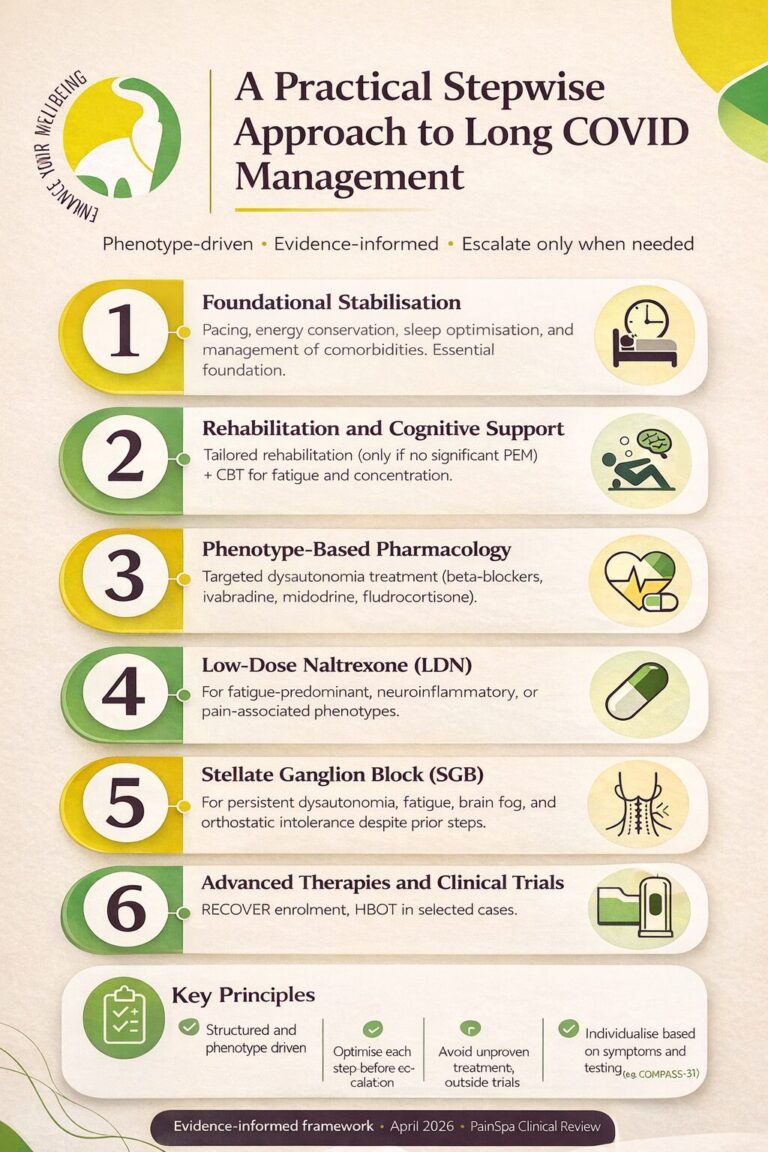
Step 1 — Foundational Care
Pacing, sleep optimisation, comorbidity management, validation, and symptom stabilisation.
Step 2 — Rehabilitation + CBT
Carefully selected rehabilitation for those without significant PEM, plus CBT to address fatigue, concentration, sleep, and activity patterns.
Step 3 — Phenotype-Based Pharmacology
Target dysautonomia, orthostatic symptoms, pain, sleep, and mood according to the dominant phenotype.
Step 4 — LDN
Consider particularly in fatigue-predominant, PEM, chronic pain, and brain fog phenotypes.
Step 5 — SGB
Targeted intervention for persistent dysautonomia, especially in patients with fatigue, brain fog, orthostatic intolerance, or tachycardia despite prior treatment.
Step 6 — Trials / Advanced Therapies
RECOVER enrolment, selected HBOT use, and other emerging therapies within an evidence-informed framework.
Key Message for Patients Seeking Unproven Treatments
Some patients are now being offered private treatments for long COVID that are not supported by credible evidence, including triple anticoagulation, apheresis, and nicotine-based therapies. These interventions may carry significant risk and are not recommended by major clinical guidelines. Patients should be guided towards evidence-based care and, where possible, participation in well-designed clinical trials.