
Stellate Ganglion Block (SGB) Injections for PTSD: Current Evidence

🧠 Stellate Ganglion Block for PTSD: Emerging Evidence and Clinical Insights
Post-traumatic stress disorder (PTSD) is a chronic psychiatric condition that can develop following exposure to traumatic or highly stressful events.
It is associated with significant emotional distress, autonomic dysregulation, and impairment in social, occupational, and interpersonal functioning.
This article summarises findings from a peer-reviewed systematic review and meta-analysis published in
Autonomic Neuroscience: Basic and Clinical (2025), and explores the potential role of
stellate ganglion block (SGB) as an adjunctive treatment for PTSD.
🔍 Understanding PTSD
PTSD is characterised by a constellation of symptoms including:
- Re-experiencing traumatic events (flashbacks, nightmares)
- Avoidance of trauma-related triggers
- Persistent negative thoughts or emotional numbing
- Hyperarousal (irritability, exaggerated startle response)
- Sleep disturbance and depersonalisation
PTSD can lead to significant impairment in daily life. Epidemiological data suggest:
- Lifetime prevalence: ~9%
- 12-month prevalence: ~4–12%
⚠️ Limitations of Conventional PTSD Treatments
Standard PTSD management typically involves a combination of psychotherapy and medication. While effective for many, a substantial proportion of patients experience incomplete or delayed relief.
Psychotherapy
- Cognitive Behavioural Therapy (CBT)
- Exposure-based therapies
- Individual, family, and community-based interventions
Pharmacological treatment
- SSRIs and SNRIs
- Tricyclic antidepressants
Common challenges with current treatments include:
- Medication effectiveness around ~60% in many cohorts
- Delayed onset of action (often 4–8 weeks)
- High dropout rates from therapy (often quoted 30–50%)
- Side-effects affecting adherence
- Stigma and access barriers to psychotherapy
These limitations have driven interest in novel biological treatments targeting autonomic nervous system dysregulation, a core feature of PTSD in many patients.
⚡ Why Consider Stellate Ganglion Block (SGB) for PTSD?
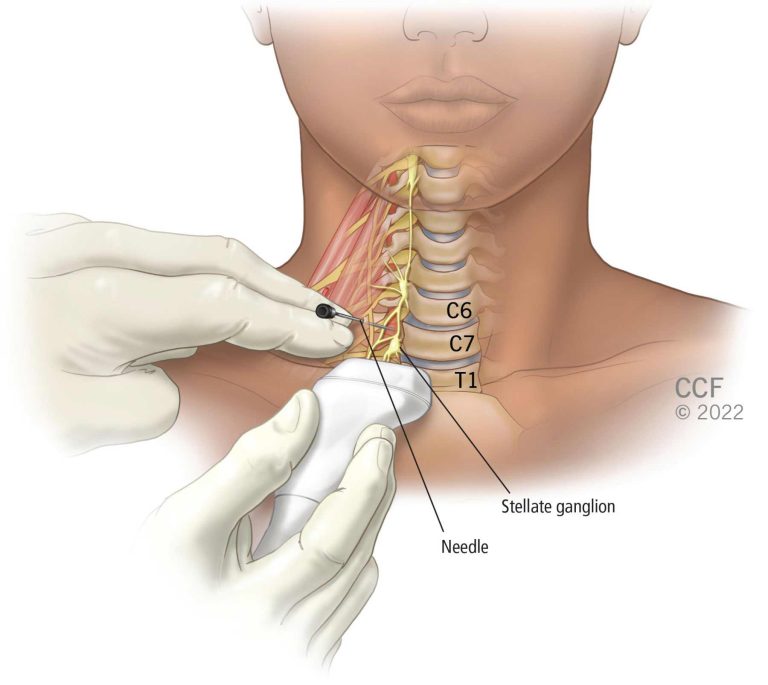
The stellate ganglion forms part of the cervical sympathetic chain and plays a key role in regulating autonomic nervous system activity.
SGB involves an image-guided injection of local anaesthetic around this structure, with the aim of reducing excessive sympathetic output.
• Reduction in sympathetic nervous system hyperactivity
• Modulation of nerve growth factor (NGF) signalling
• Influence on the hypothalamic–pituitary–adrenal (HPA) axis
• Alteration of stress hormone release
• Functional “resetting” of maladaptive autonomic responses
📊 Evidence From the Meta-Analysis
The systematic review screened 394 records and included:
- 3 studies in total
- 2 randomised controlled trials
- 1 case-control study
- High methodological quality across included RCTs
Key findings demonstrated a statistically significant reduction in PTSD symptom severity:
- Mean reduction in CAPS score: –6.24 points
- Statistical significance: P = 0.006
SGB was associated with meaningful improvement in PTSD symptoms compared with control treatments.
🧠 Impact on Co-Morbid Symptoms
PTSD frequently co-exists with depression. Baseline PHQ-9 scores in the included studies suggested moderate to severe depressive symptoms.
SGB was associated with:
- Reduction in depressive symptom severity
- Improvement in PHQ-9 scores
- Minimal improvement in anxiety and pain measures in the studies reviewed
This pattern suggests SGB may be more effective for core PTSD symptoms and co-morbid depression, rather than for all anxiety and pain outcomes.
🧪 PTSD Assessment Tools Used in the Studies
CAPS-5 (Clinician-Administered PTSD Scale)
- Often considered the gold-standard diagnostic interview
- Structured clinician-administered tool
- Time-intensive and requires trained clinicians
PCL-5 (PTSD Checklist)
- Self-reported symptom severity scale
- Faster and more accessible
- Useful for monitoring response over time
🧲 Safety of Stellate Ganglion Block
When performed by experienced clinicians using image guidance (commonly ultrasound), SGB is generally considered a low-risk procedure.
Safety data referenced in the literature include:
- Over 45,000 reported SGB procedures
- Overall complication rate around ~0.17%
Most reported adverse effects are mild and transient, for example:
- Injection site discomfort
- Temporary hoarseness or throat sensation
- Transient cough
Rare risks include intravascular injection, local haematoma, infection, and very rarely pneumothorax.
These risks are reduced when the procedure is performed by experienced clinicians using ultrasound guidance.
🧠 Right- vs Left-Sided (or Bilateral) SGB: Is There a Difference?
Research suggests PTSD may involve asymmetrical brain activity in some individuals. Current evidence does not identify a single “correct” side for all patients.
Studies and EEG findings suggest right-sided, left-sided, or symmetrical patterns may exist.
Emerging evidence suggests bilateral SGB may provide greater symptom relief in some patients, potentially by producing a stronger autonomic modulation.
Further research is needed to define the optimal laterality strategy.
🧠 PTSD, Brain Connectivity, and Chronic Pain
PTSD shares neurobiological overlap with certain pain conditions such as complex regional pain syndrome (CRPS),
including insular cortex involvement and sympathetic overactivity. PTSD may also increase vulnerability to chronic pain in some patients.
Animal and imaging studies describe connections between the stellate ganglion and key brain regions involved in threat processing and autonomic regulation, including:
- Amygdala
- Hypothalamus
- Insular cortex
- Prefrontal cortical regions
⚠️ Limitations of Current Evidence
- Small number of studies
- Heavy reliance on military populations
- Limited generalisability to civilian PTSD
- Short follow-up durations (often 1–8 weeks)
- Confounding effects of concurrent medications
- Variability in study design and outcome measures
📌 Strengths of the Meta-Analysis
The 2025 systematic review and meta-analysis has several strengths that support the credibility and clinical relevance of its findings:
- Rigorous study selection and quality assessment
- Inclusion of randomised controlled trials
- Use of validated PTSD outcome measures (including CAPS)
- Consideration of both PTSD severity and co-morbid depression outcomes
Importantly, the review presents balanced conclusions, supporting SGB as a potential adjunctive treatment rather than a replacement for established PTSD care and clearly identifying areas where further research is needed.
🌱 Clinical Take-Home Messages
✔ Benefits may be greatest for core PTSD symptoms and co-morbid depression
✔ SGB is generally safe when performed by experienced clinicians using ultrasound guidance
✔ SGB may complement, rather than replace, psychotherapy and medication
🧩 Conclusion
Stellate ganglion block represents a promising, biologically plausible intervention for PTSD, particularly in patients who have not responded adequately to standard treatments.
While early evidence supports its safety and efficacy, larger, well-designed randomised trials are required to clarify:
- Optimal dosing and frequency
- Laterality (unilateral vs bilateral)
- Long-term outcomes
- Best integration with psychotherapy and medication
As research evolves, SGB may become an important component of a multimodal, personalised approach to PTSD care.
❓ Frequently Asked Questions (FAQ) and Consent Information
What Is a Stellate Ganglion Block?
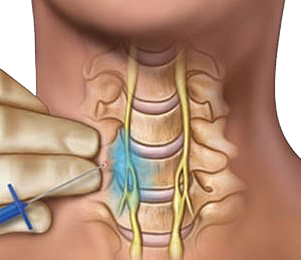
A stellate ganglion block (SGB) is an image-guided injection of local anaesthetic around the stellate ganglion, a collection of sympathetic nerves in the lower neck.
The aim is to reduce excessive sympathetic nervous system activity, which is believed to contribute to PTSD symptoms in some patients.
Is SGB a Cure for PTSD?
No. SGB is not a cure for PTSD. It is considered a potential adjunctive treatment that may help reduce symptom severity,
particularly hyperarousal and stress-related symptoms. It is most effective when used alongside established psychological and medical therapies.
Who May Be Suitable for SGB?
SGB may be considered for individuals who:
- Have a confirmed diagnosis of PTSD
- Continue to experience significant symptoms despite standard treatments
- Have prominent autonomic symptoms (e.g. hyperarousal, sleep disturbance)
- Are able to engage in follow-up and multidisciplinary care
A full clinical assessment is required to determine suitability.
Who May Not Be Suitable?
SGB may not be appropriate for patients with:
- Active infection at the injection site
- Bleeding disorders or uncontrolled anticoagulation
- Allergy to local anaesthetics
- Certain anatomical or medical conditions affecting the neck
These factors are assessed during the pre-procedure consultation.
How Effective Is SGB?
Current evidence suggests some patients experience rapid symptom improvement, others experience partial or delayed benefit, and some experience minimal benefit.
Response varies between individuals, and further research is ongoing.
How Soon Will I Notice a Difference?
- Some patients report changes within hours to days
- Others notice gradual improvements over several weeks
- Some may experience little or no benefit
How Long Do the Effects Last?
- Benefits may last from weeks to months
- Some patients require repeat injections
- Long-term treatment schedules are not yet standardised
Is the Procedure Painful?
Discomfort is usually minimal. A small needle is used and local anaesthetic is applied to the skin.
Most patients describe a sense of pressure rather than pain.
What Are the Common Side Effects?
Temporary effects are common and expected, including:
- Drooping of the eyelid on the treated side
- Warmth or redness of the face or arm
- Hoarseness or throat sensation
- Nasal congestion
These typically resolve within a few hours.
What Are the Risks?
Serious complications are rare but may include bleeding or bruising, infection, inadvertent vascular injection, and very rarely pneumothorax.
These risks are reduced when the procedure is performed by experienced clinicians using ultrasound guidance.
Can SGB Be Combined With Other Treatments?
Yes. SGB is commonly used alongside trauma-focused psychological therapy (e.g. CBT) and medications for PTSD or depression.
It should not replace evidence-based mental health care.
Consent and Shared Decision-Making
Before undergoing SGB, the procedure, benefits, and risks will be explained, and alternative options discussed.
You will have the opportunity to ask questions. Written informed consent is required. Shared decision-making is central to safe and ethical care.
• SGB is an emerging, adjunctive treatment
• Benefits cannot be guaranteed
• Risks, although low, are present
• Ongoing psychological support remains important
🏥 Experience at PainSpa
At PainSpa, Dr Krishna has extensive experience in performing ultrasound-guided stellate ganglion blocks
as part of a multidisciplinary approach to complex pain and autonomic conditions.
Careful patient selection, detailed counselling, and shared decision-making are central to achieving safe and meaningful outcomes.
Disclaimer: This article is for educational purposes only and does not replace individual medical assessment or personalised treatment advice.