
Significant Improvement in Back Pain following Sacroiliac Joint Denervation

A 57-year-old gentleman with chronic right-sided low back and buttock pain experienced long-lasting relief following sacroiliac joint radiofrequency denervation performed by Dr. Krishna at Pain Spa, Bristol.
Introduction
A 57-year-old male presented with persistent right-sided low back and buttock pain lasting over eight years. The pain was localised around the lumbosacral junction, radiating to the right buttock but not below it. He denied any tingling or numbness in the legs. The pain was aggravated by prolonged sitting or standing, and he experienced marked discomfort when rising from a seated position. His symptoms had a significant impact on his ability to exercise, function, and maintain a good quality of life.
Case Summary
The patient had previously consulted multiple specialists, including physiotherapists, osteopaths, chiropractors, and the spinal surgical team. Imaging with lumbar spine X-rays and MRI scans revealed degenerative changes in the lumbar discs and facet joints, but no evidence of nerve compression. Despite trying various conservative and interventional treatments, including spinal injections, his pain persisted. He was taking regular paracetamol with codeine phosphate but found minimal relief.
On examination by Dr. Krishna, there was localised tenderness over the right sacroiliac joint and pain provoked with sacroiliac joint stress tests. Based on clinical findings, the pain was thought to arise from right-sided sacroiliac joint dysfunction. A diagnostic sacroiliac joint injection was performed, which resulted in excellent pain relief lasting nearly two months, confirming the diagnosis.
Treatment Details
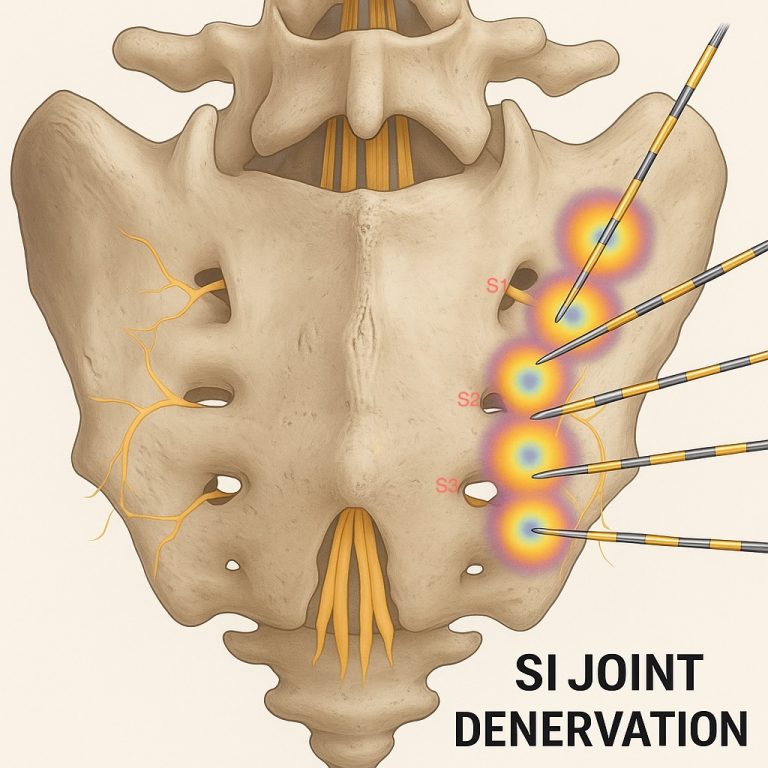
Following this response, Dr. Krishna recommended right-sided sacroiliac joint radiofrequency denervation under fluoroscopic guidance. This advanced procedure targets the complex nerve supply to the sacroiliac joint, which arises from multiple spinal levels, making precise anatomical knowledge and fluoroscopic expertise essential for success. Dr. Krishna utilised a quadruple lesioning technique to create larger, more effective lesions, thereby improving treatment efficacy and long-term outcomes.
Outcome
At the three-month follow-up, the patient reported significant improvement in pain and mobility. This improvement was sustained at 12 and 18 months, with continued benefit in function and quality of life. He was able to return to regular exercise and attend the gym, expressing that the treatment had been life-changing. A rehabilitative programme focusing on core stability and strengthening exercises was recommended for long-term management.
Discussion / Expert Insight
Radiofrequency denervation of the sacroiliac joint is a technically challenging procedure due to the joint’s complex nerve supply. Accurate needle placement and precise lesioning under fluoroscopic guidance are vital for a successful outcome. Dr. Krishna is a recognised expert in interventional pain management with extensive experience in performing radiofrequency procedures for spinal pain. His in-depth understanding of fluoroscopic anatomy, coupled with the use of advanced techniques such as quadruple lesioning, ensures safe, effective, and long-lasting results for his patients.
For more information about sacroiliac joint radiofrequency treatment or to find out if this procedure may be suitable for you, please visit www.painspa.co.uk or email us at clinic@painspa.co.uk for further details.